Cuenca is nice in the same way that Barcelona or the South of France are nice. It has a brilliant climate, beautiful buildings, kind locals and clean and functional streets. It is not just me saying this – the World Travel Index named Cuenca as the best city in South America to visit in 2026.
Of all the places that I visited during my trip through Peru and Ecuador, I would live in Cuenca. In fact, I practically did. I stayed here for three weeks doing a Spanish school, and it is a joy to share one of my favourite places in South America.
Why visit Cuenca
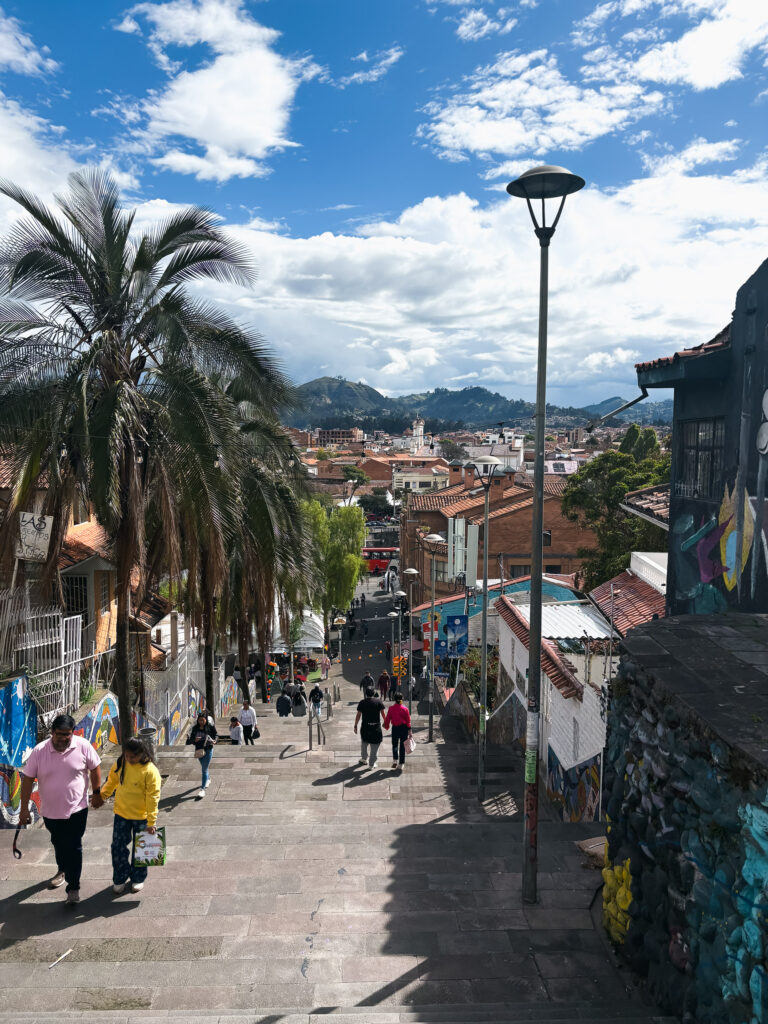
I found the most mundane things fascinating in Cuenca: people in suits walking with purpose, no rubbish on any streets, drinkable tap water, functional modern trams and five-star hotels with rooftop terraces – I could have been in Europe as far as the lifestyle was concerned.
That the rich Andean culture remained intact within this beautiful framework was fascinating. I celebrated the Day of the Dead through a festival in the municipal cemetery and visited a traditional healer to expel evil energies – all within a UNESCO World Heritage site.
Even the region beyond Cuenca was astounding – from the rugged Las Cajas national park to Ecuador’s largest Inca ruins, Ingapirca. There was so much to see and feel, and in such a comfortable city too. I opted to enrol in a Spanish course instead of leaving.
How to get to Cuenca
Cuenca sits at the finish line of Ecuador’s brilliant Avenue of the Volcanoes, in the South of Ecuador, also convenient for those crossing the border from Peru.
- From Quito – 10 hours
- From Mancora – 8 hours
- From Montanita – 6 hours
- From Cotopaxi – 7 ⅕ hours
Where to stay in Cuenca
My favourite places & experiences as an honorary Cuenca local
Cathedral of Cuenca
Also known as the New Cathedral, this defines Cuenca’s skyline with its ultramarine domes, which are quite unlike anything I had seen on a church before.
You might notice that the towers look slightly too short, and that is because they are. They eventually realised that the building could not support the planned size of the towers, so they had to be shortened to the slightly awkward height of today.
The interior is typically ornate as Latin Catholic Churches tend to be, and is huge – it was built to fit the entire citizenry of Cuenca inside, though now at 500,000 people it may have to be extended. The real action is up on the terrace.
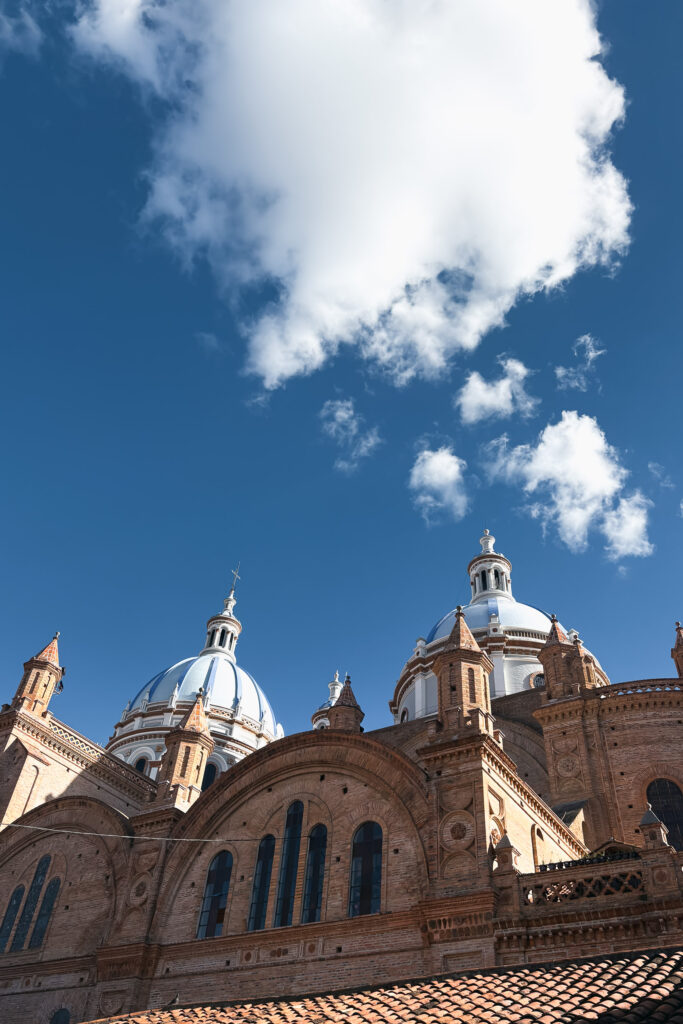
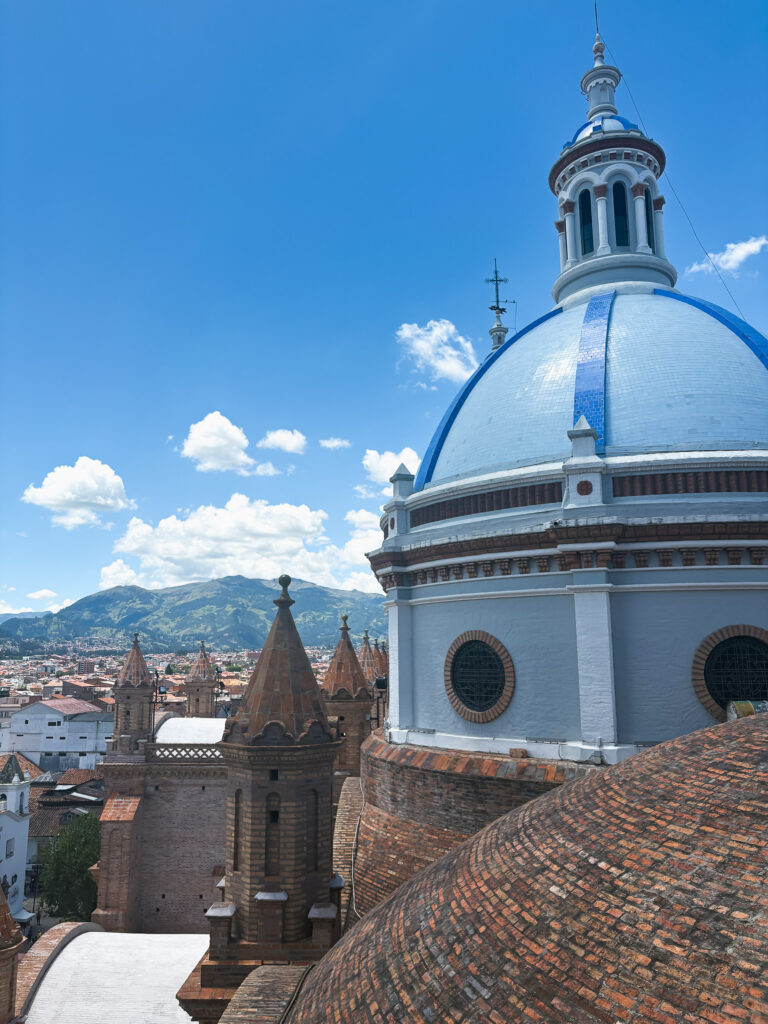
That the cathedral is by far the tallest building in the city hints at Cuenca’s traditional outlook. It also offers the visitor an astounding view over the city. Panoramas of Cuenca, with its soaring spires and tiled roofs, taper up to the rugged Cajas mountains which rise to 4400m. You also get a closer look at the famous blue domes. Well worth the $4 to enter.
The plaza in front of the Cathedral, Plaza Calderon, is a standout in the city too. Planted with fragrant trees, relaxed locals will read newspapers and play chess.
Across the plaza from the Cathedral is the Old Cathedral – now a museum of religious art and with spooky catacombs beneath. To the side of the Cathedral is a street tracing the outline of the original Canari founders, popping with bars and restaurants.
Led by a 19-year veteran local guide, this free walking tour explores Cuenca’s historic center and beyond.
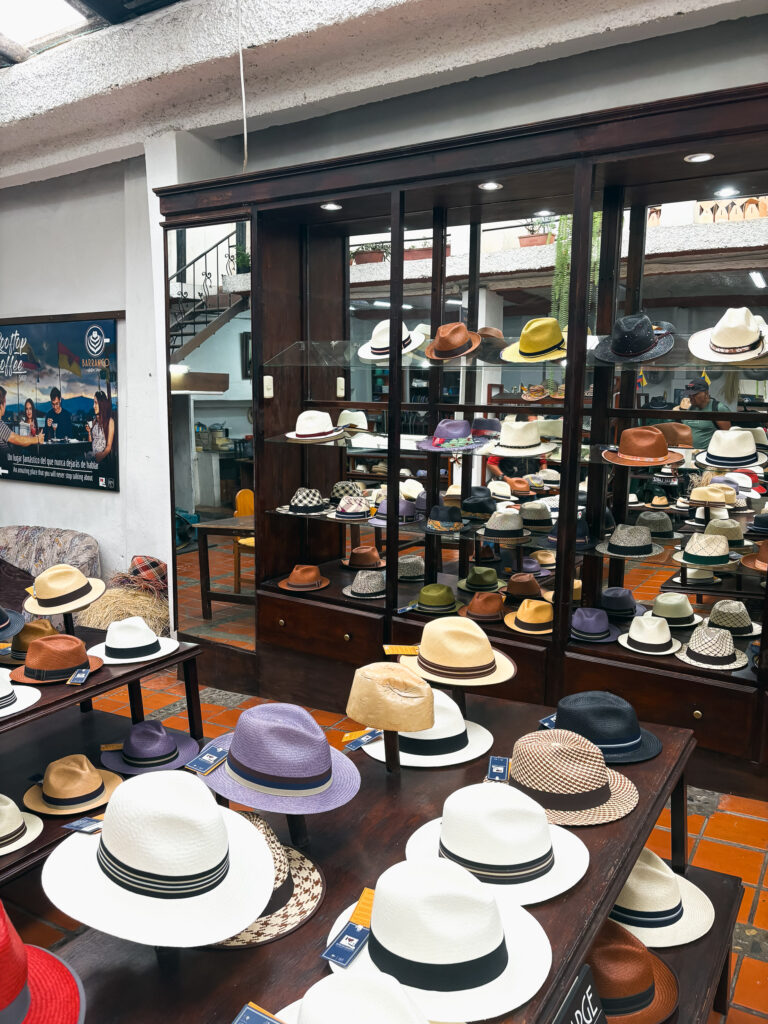
The route hits El Vado barrio, the dramatic Tomebamba river ravine (El Barranco), a still-working Toquilla hat factory (the “Panama” hat is Ecuadorian — he’ll explain), the raw 10 de Agosto market, plazas, churches, the Carmen Monastery, and the Modern Art Museum.
Pay whatever you think it’s worth at the end.
book now on guruwalkMirador Turi
Along with the domed Cathedral, Turi is an everpresent feature of Cuenca’s cityscape. You will see the fairytale white church perched on a hill from all angles in the city. It is about an hour to walk there from the city centre.
A taxi there costs no more than $5. Uber does not work in Cuenca, so either flag down one of the ubiquitous yellow taxis, or use the closest substitute, Azutaxi, an app that can call a taxi to your location.
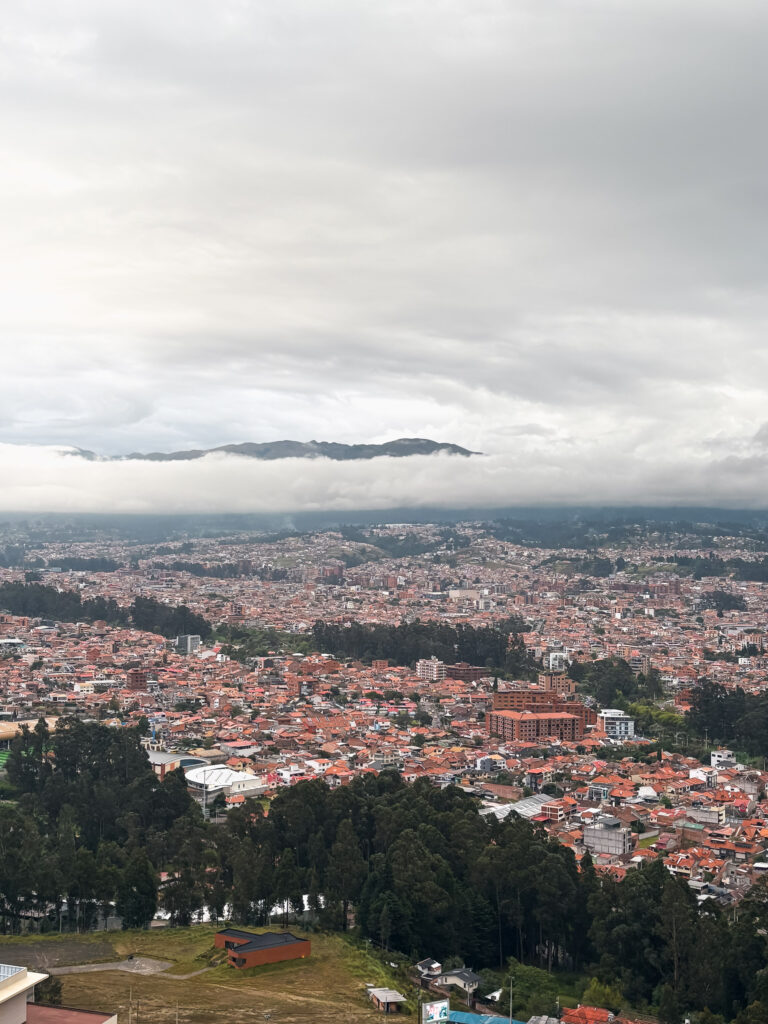
Mirador Turi gives panoramic views over the entire city, looking directly at the historical centre. I went up at sunset on my first night and knew that I was in a special place when I saw the spires of Cuenca illuminated in the dusky pink of sunset.
There are also many bars for a sunset beer or glass of wine.
Rio Tomebamba
There is something just so intangibly special about this river. It is a fast-flowing river in a hurry exactly like those torrents you find in the Andes. The difference here is that it flows alongside a beautiful promenade of balconied colonial buildings housing bars, cafes and art galleries. It also separates the old town from the modern section of Cuenca.
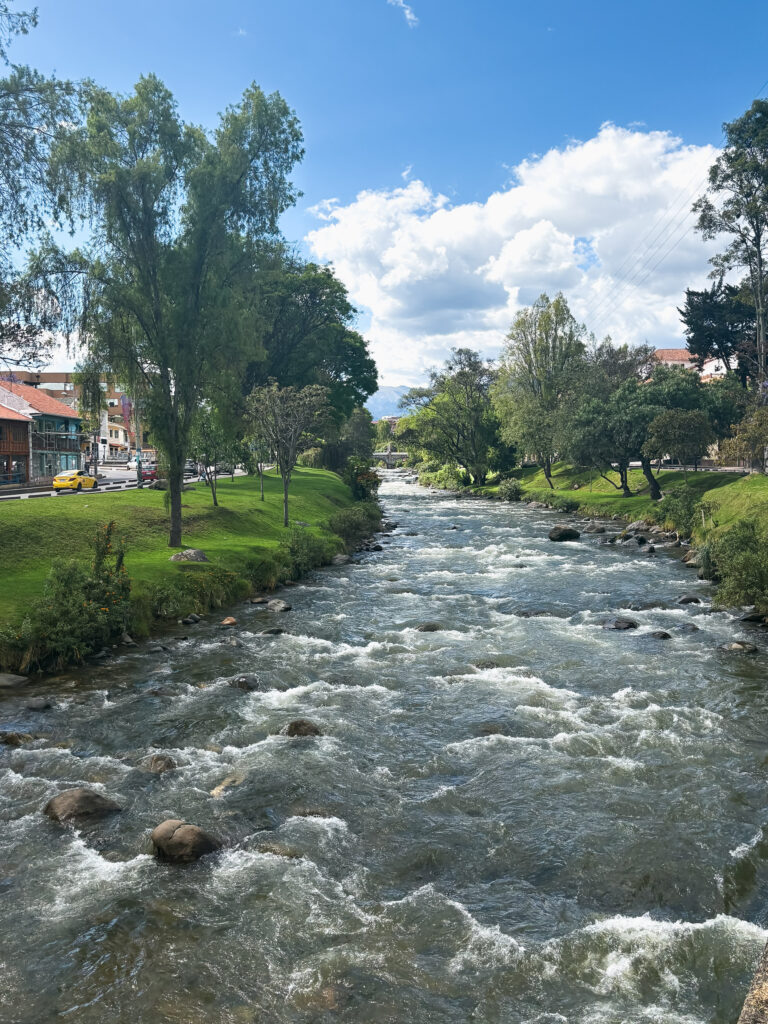
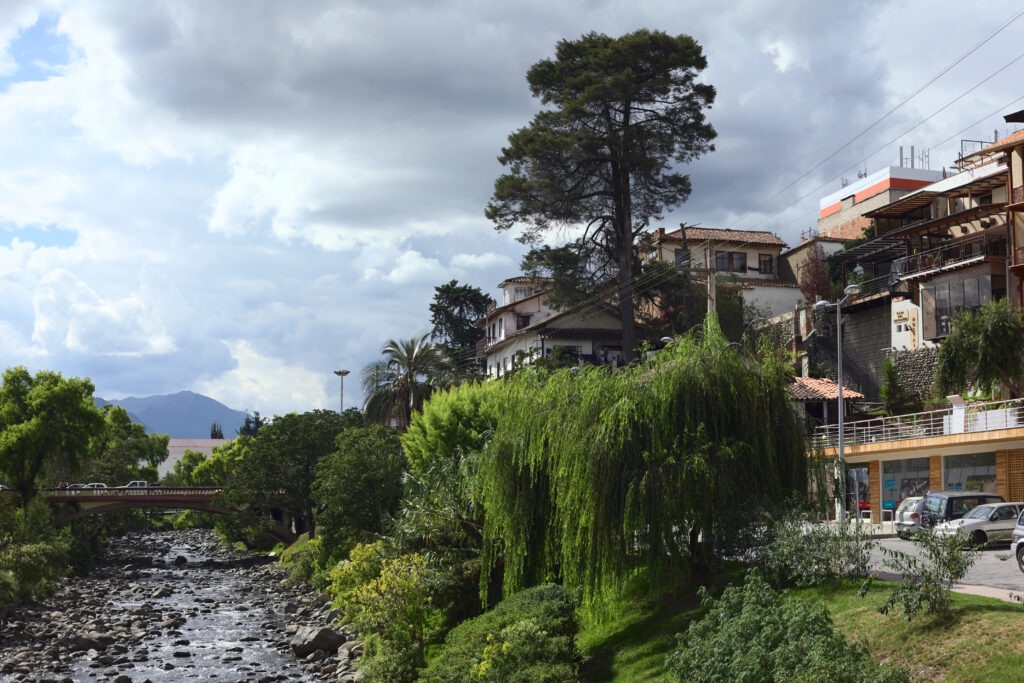
The water’s edge is outlined by grassy banks shaded with willow trees, the perfect place to read or eat some takeaway tacos. Sitting down listening to the music of the river brought me so much joy. I think that I walked or ran along the river every day of my three weeks here.
Every Saturday there is a pop-up market selling everything from football shirts to artisanal honey by Puente Roto (the broken bridge), which brings something of a carnival atmosphere to the riverside.
On a Saturday night, there was even a rap battle tournament which was endlessly entertaining. The swagger of the contestants combined with the baying of the crowd as they traded lyrical barbs was hilarious. Not all of the words they used would be used in my Spanish class!
Pumapungo
Cuenca is actually three cities built on top of each other, and Pumapungo explores the fascinating history beneath your feet in Cuenca. First came the indigenous Canari, who lived in this area for thousands of years and built a sizable town.
The Incas came from far to the South, and conquered the Canari, razing their city and interestingly building a city in the image of Cusco. However, the Spanish soon arrived, dispossessed the Incas and most of their stones disappeared into modern Cuenca. The Inca foundations at Pumapungo are all that remain of Pre-Hispanic Cuenca.
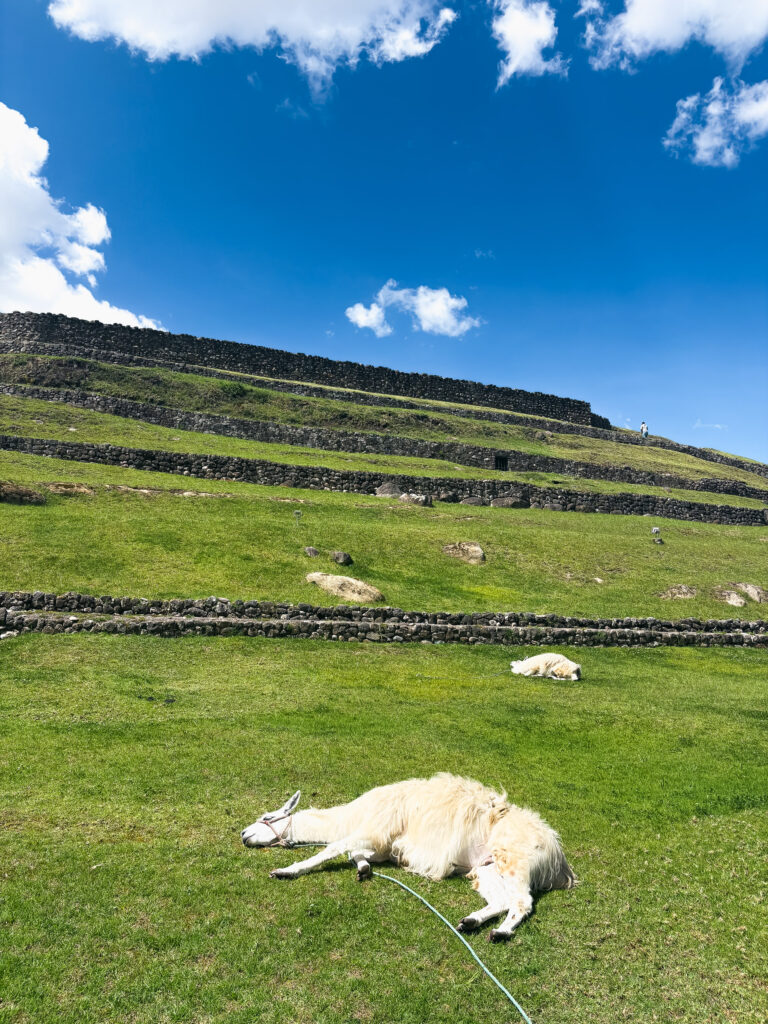
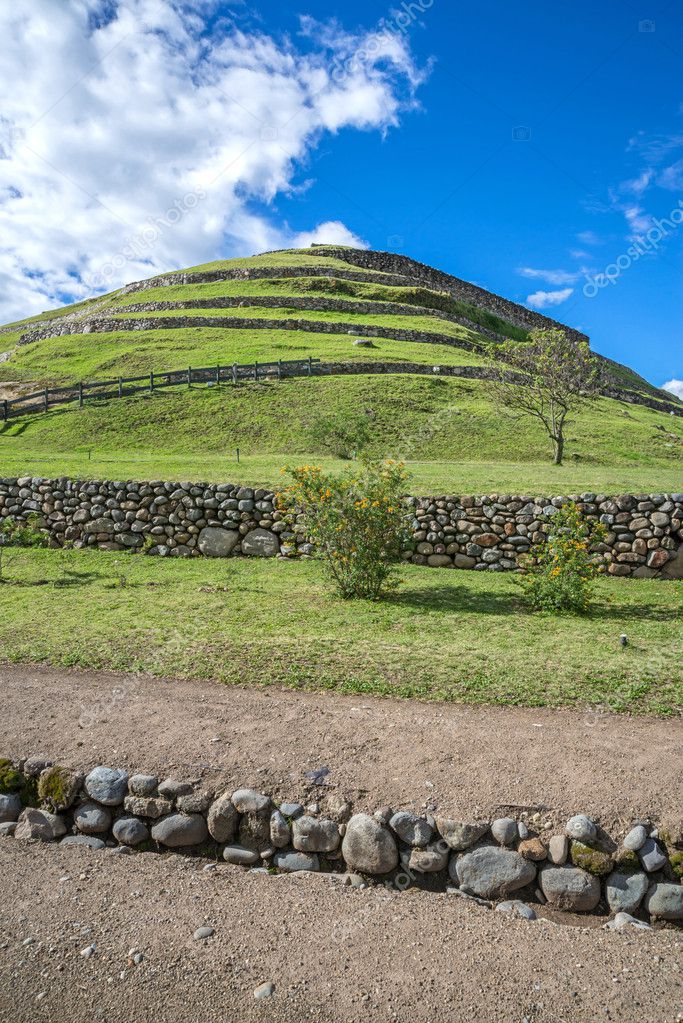
While interesting, the ruins are not the highlight here. I visited thinking that it was just a museum, but it is really three or four things rolled into one. Inside the museum, exhibits show the artefacts recovered from the Inca and Canari cities, fascinating glimpses into the two indigenous civilisations that trod this land.
The upper floor is an exploration into other Ecuadorean cultures, including Afro-Ecuadorean life, cowboys and most interestingly, a look into the world of the rainforest. The exhibits include real shrunken heads and a shrunken sloth!
Outside beyond the ruins is a botanical garden and a bird sanctuary. The botanical garden showcases hundreds of plants indigenous to the Andes, a riot of colour and a brilliant explanation of the region’s natural riches. The bird sanctuary houses species like macaws and toucans.
The gardens were so peaceful that I returned a handful of times to just read in the sun, breathe in the aromas of the flowers and watch the llamas graze against the Inca terraces.
With free entry, it simply has to be on your list to visit.
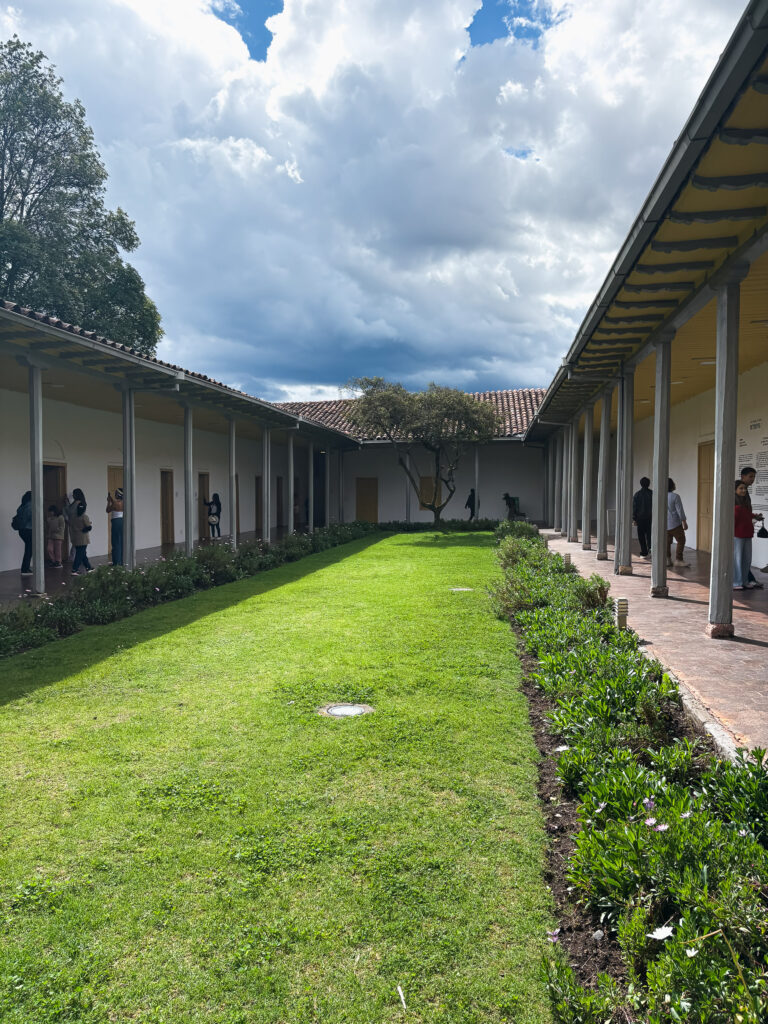
Museum of Aboriginal Cultures
This is more specific than Pumapungo, but anyone even mildly curious about the thousands of years of independent civilisation here in Ecuador should visit.
I had little idea of what went on in Ecuador before the Spanish arrived, and the beauty of travel is that you can learn so much on your feet as you are immersed in a different world. Places like this are a brilliant help.
Ecuador has been inhabited for fourteen thousand years, and as most cultures used stone to create tools or art, much has survived. The layout in this old colonial building makes it feel more like an eccentric collector’s study, which suits the mystery of these artefacts more than a formal museum pretending to have all the answers.
The sculptures depict a range of figures, from human-animal hybrids, to childbirth to drug-induced trances, but all have a sense of playfulness and deep fascination with existence and the natural world. Just so interesting.
The gift shop and cafe are also brilliant extras. The gift shop sells a lot of original film photos of ruins or indigenous scenes as well as reasonably priced textiles and traditional jewellery. The cafe also served me one of the strongest coffees I’ve ever had – it was like jet fuel.
Watching a football match
Deportivo Cuenca are by no means on the level of Boca Juniors or Flamengo or any of the other iconic South American teams, but they do offer an enjoyable, safe match experience for just $5.
I watched Cuenca take on Macara, and it was a brilliant look into South American football culture. Both teams had their own Mariachi bands in the stadium to cheer on their sides. With players from Argentina and Brazil in the Ecuadorian league, expect to see plenty of flair and golazos.
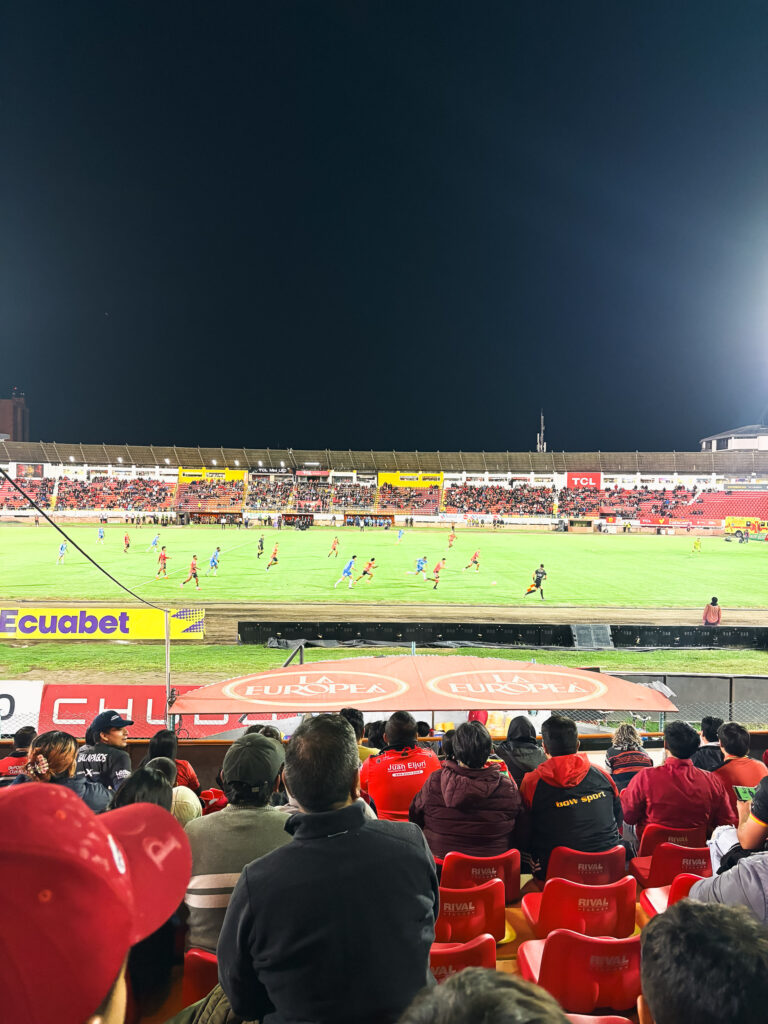
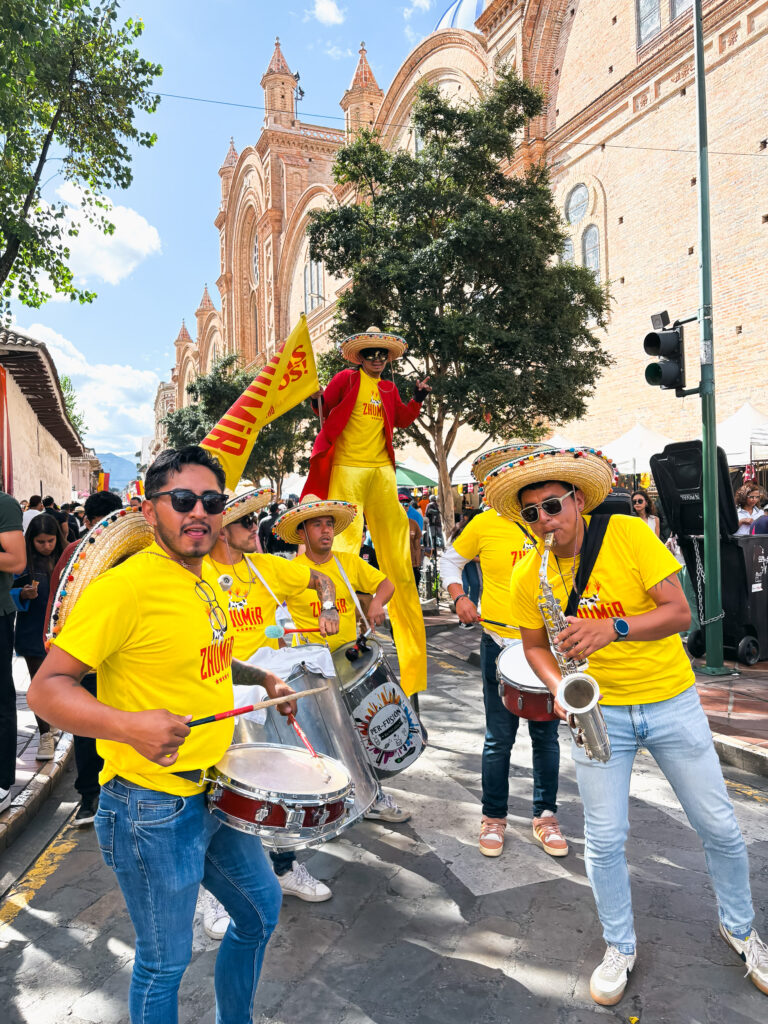
While Cuenca lost, I saw three stunning goals, some penalty controversy, a chanting campaign aimed at the referee and a 16 year old player running the show who will surely end up in Europe. Overall, a brilliant night out for $5.
Do not worry about buying a ticket online, simply head down to the ticket office in the stadium. Standard seats are $5 and “premium” ones closer to the halfway line are $8. Ignore the touts reselling tickets, they were charging double what was available in the stadium. Estadio Alejandro Serrano is a twenty-minute walk from the historical centre.
Best squares for hangouts/meals
While there are some brilliant sights to see, the best experiences in Cuenca come from aimlessly wandering around the postcard-perfect historical centre or soaking it all up in a plaza.
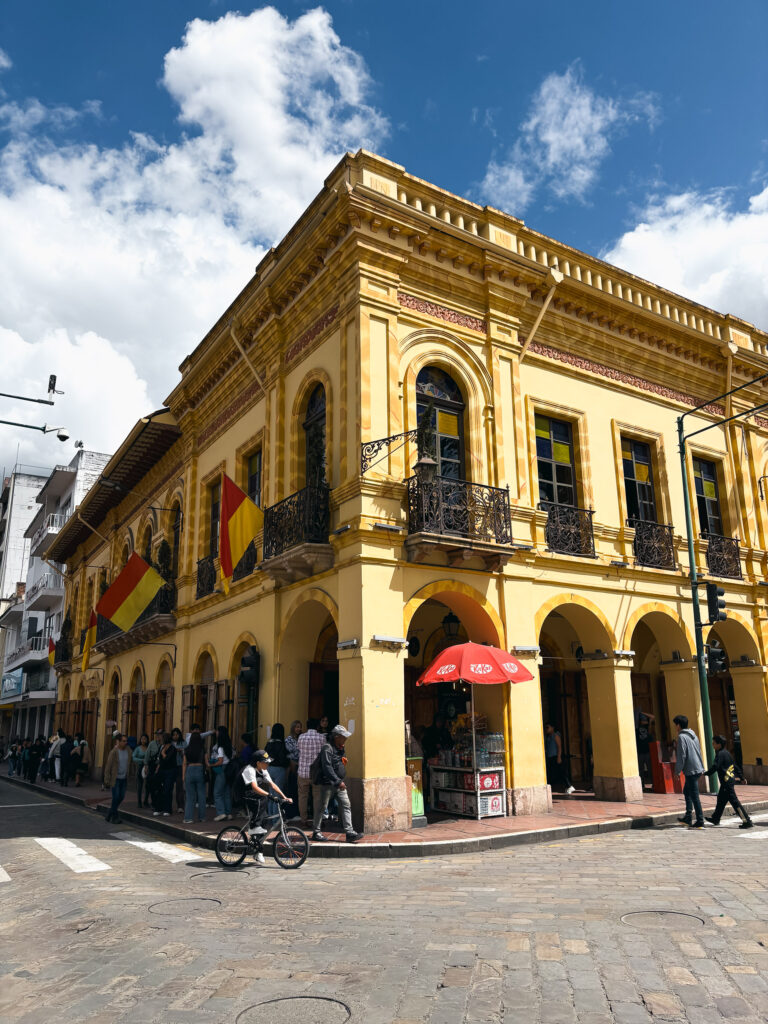
Plaza de San Sebastian is a favourite of mine. It houses a modern art gallery in a beautiful building. I particularly enjoyed the exhibition about Pablo Escobar’s escaped hippos causing chaos in Colombia. Elsewhere on the square are pubs and restaurants with alfresco dining on the palm tree-adorned square with a fountain.
Plazoleta Cruz del Vado has wonderful views over the River Tomebamba and a bandstand with many pop-up performances. I even stumbled across an antiques market on the weekend.
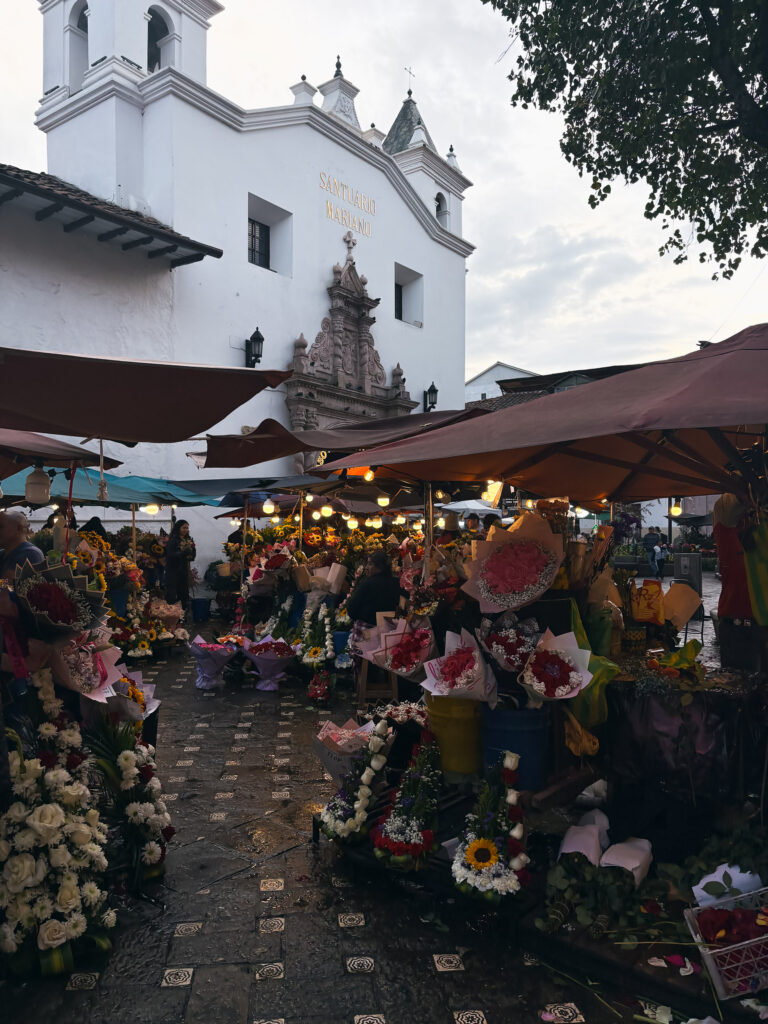
Plaza de las Flores is located just off of the principal plaza and, as the name suggests, is a massive flower market. It is a brilliant photo op and a very peaceful place to browse flowers. The church behind it, La Iglesia de la Virgen del Carmen, is a pilgrimage destination. Seeing people coming from faraway to pray at the shrine gives a spiritual ambience to this plaza.
One of the best spots for a meal is Calle Larga. There is a range of international cuisine here like Mexican restaurants, curry houses, Italian food and shawarma joints as well as local eats. By night, this becomes the focal point of Cuenca’s nightlife and has numerous nightclubs.
An effortless, scenic bike ride through Cuenca’s best bits, all the historic neighborhoods, lush parks, sweeping viewpoints, and rivers.
You’ll discover hidden corners you’d never find alone, with a guide who moves at your pace.
book now on getyourguideMarket experience
Cuenca has several markets, but the pick of them for me was Mercado 10 Augusto. This is just five minutes from the historical centre. I could never tire of buying kilos of delicious fresh fruit from cherries, to blackberries, to blueberries, to passion fruits and bananas for a few dollars. Back home, I would have to take out a mortgage to do the same with worse fruit.
The upstairs section hosts a food court showcasing Ecuadorean cuisine. One of the standouts was Encebollado – a rich, onion-based fish stew made with fresh albacore tuna, yuca, and pickled red onions which is widely believed to cure hangovers, it certainly helped with mine.
My most interesting visit to the market was in search of another cure. I had a fever, and my local Spanish teacher knew just the thing: a traditional healer. Rather than a virus, she believed that my symptoms were caused by bad energies, which could be expelled in a ritual.
It began with being whacked by a bushel of rum-soaked herbs while the healer chanted in Quechua. Then the healer doused me with tobacco smoke to frighten the spirits. I next had an egg rubbed over my body and arms to absorb the bad energies. The egg was cracked to dissipate the mischievous spirits. I am no doctor, but I did feel better the next morning…
Exploring the Andes around Cuenca
Las Cajas National Park
Look beyond Cuenca and you will see undulating ridges of wild mountains rising up to the horizon – these are Las Cajas. They are just an hour by bus from Cuenca, and they are a world away from Cuenca’s comfortable streets.
The region has hundreds of high altitude lakes and some of the highest forests in the world. The woodland is wizened and bleached by the driving wind and rain, giving it the air of a Lord of the Rings scene. It is also ecologically rich with condors, Andean spectacled bears (the real life Paddington) and an impressive 157 species of birds calling this park home.
A guided hike through Cajas National Park’s dramatic glacial lakes, rolling moorland, and Andean wildlife at 4,000m elevation. Expect sweeping scenic views, rare birdlife, and one of Ecuador’s most striking ecosystems.
Approx. 7–8 hours full‑day tour with pick‑up from your Cuenca hotel (usually around 8:30)
book for $47 on viator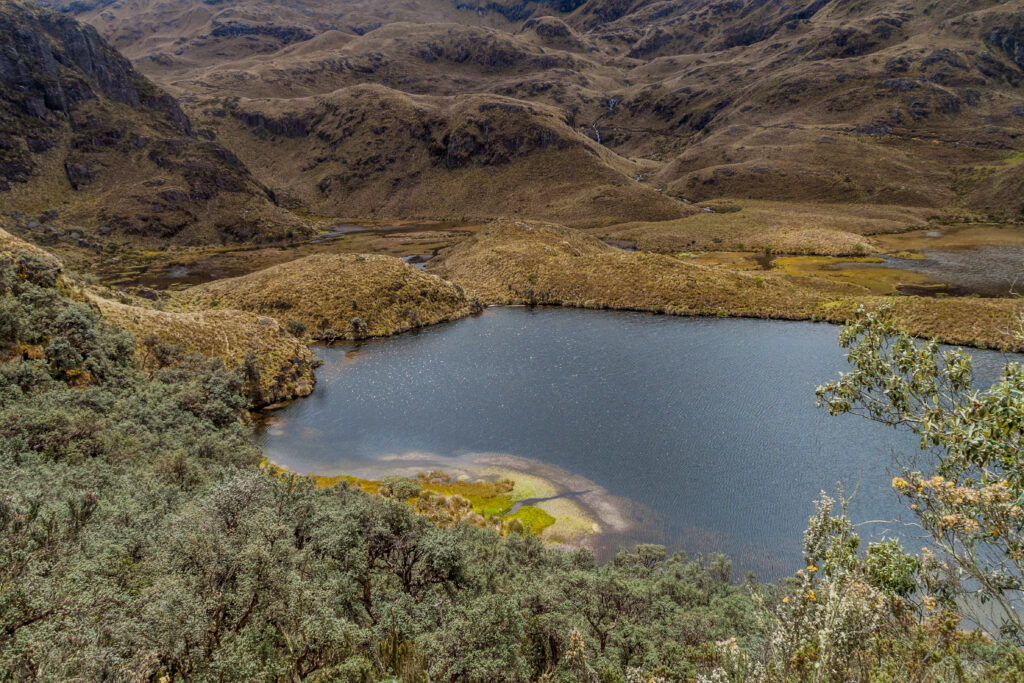
There are three main recreational areas, all at scenic lakeshores, along the Cuenca-Guayaquil road: Laguna Llaviucu, which is closest to Cuenca; Laguna Cucheros; and Laguna Toreadora. All have controls where you register and pay the $4 entry fee. The controls provide free topographical trail maps, and have marked routes from as short as 2km to 15km.
The weather is crazy up here, so bring rain jackets and some layers. The name comes from the Quechua word for cold, caxa, and this is apt. The minimum altitude is also 3100m, so maybe stay a few days at Cuenca (2,560m) to acclimatise before heading up to the Cajas if you are coming from the coast.
To reach Las Cajas independently, get the bus from Cuenca to Guayaquil and ask to be dropped off at one of the three park entries. To return, hail a Guayaquil-Cuenca bus from the roadside. Guided tours are also available from Cuenca tour agencies or online.
Ingrapirca
This is Ecuador’s largest Inca ruin and is somewhat optimistically called its Machu Picchu. I visited a lot of Inca ruins across Cusco, Ayacucho, Puno and Cajamarca, but these are very different. The Incas built them on top of a Canari town and adopted some local designs, which are fused with the usual trapeziums and seamless stonework typical of Inca buildings.
The main building is the Temple of the Sun, which stands on top of a huge elliptical platform and has brilliant views out into the mountains. I had never seen a shape like this in Inca buildings and the craftsmanship was sublime.
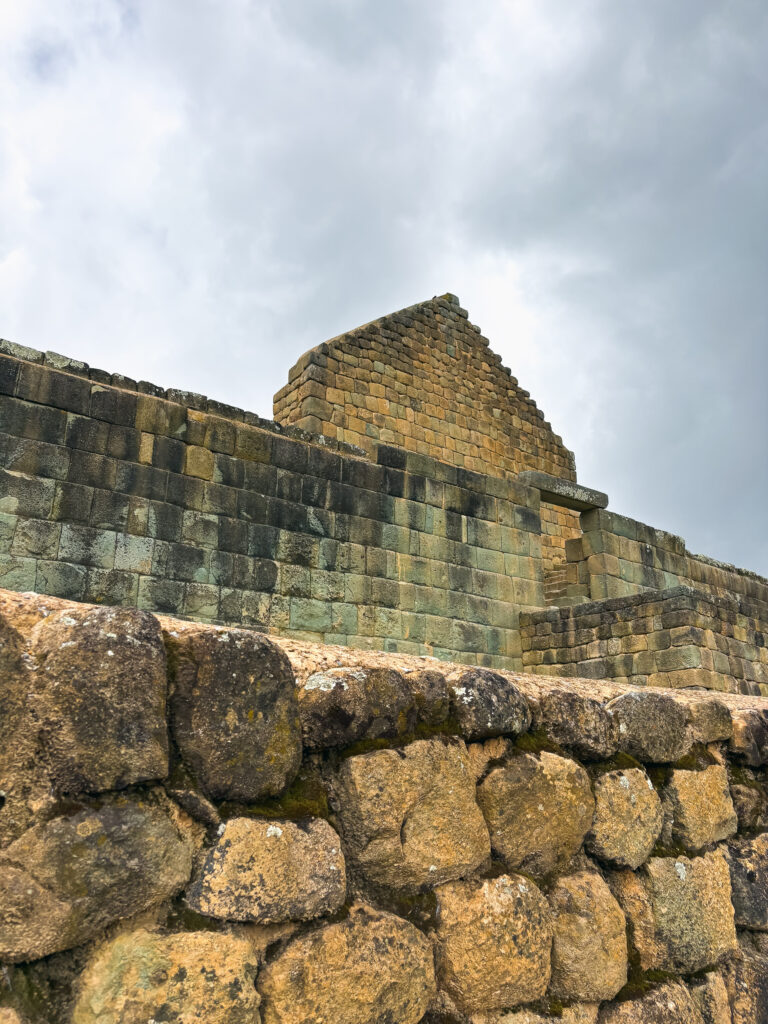
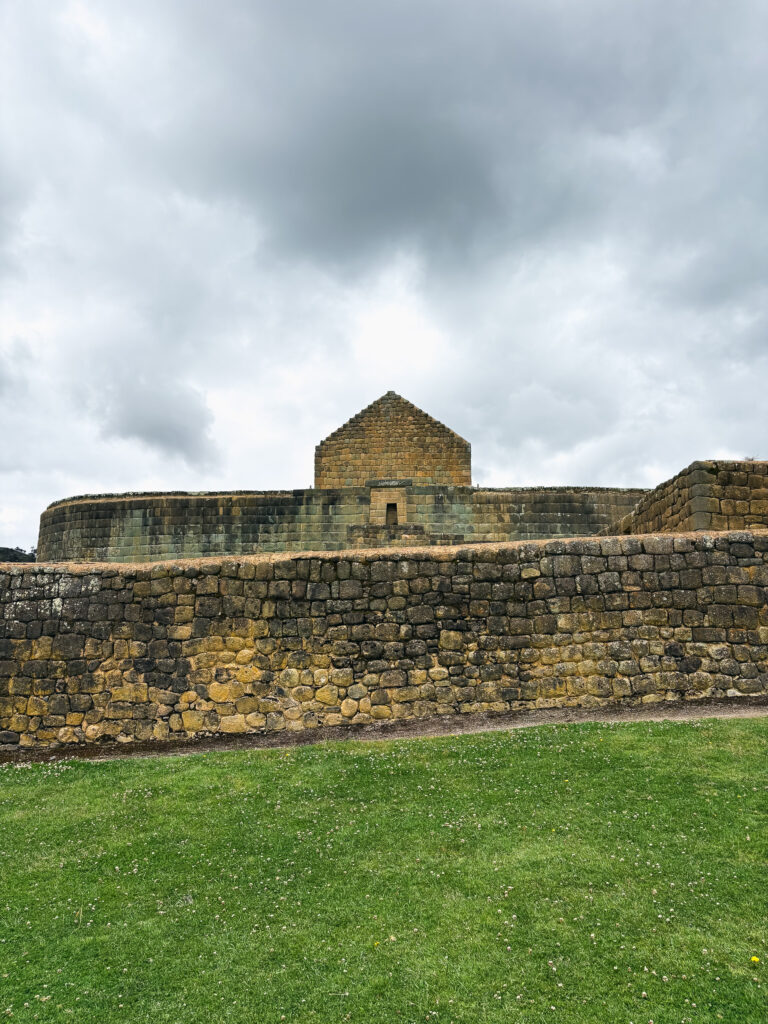
The rest of the site consists of terraces, ancient burial grounds and stone cylinders to store grain in. There is also a small museum on site to give some insight into the history of the ruins.
There is a mini-hike you can do around the site, which gives vistas into life in the tranquil Ecuadorean countryside. There is also a famous rock called “La Cara del Inca”, which looks like the silhouette of an Inca’s face. The whole trail is hung with hallucinogenic flowers, giving it a mysterious air.
To visit, catch the Transportes Canari bus which leaves Cuenca bus terminal at 9am, and leaves Ingapirca at 13:30, giving you two hours to explore the site. Tickets cost $5. Or visit by tour.
For those very interested in Inca history and hardy enough to trek through the untouched Canar province, there is a three-day-long hike called the Inca Trail that finishes at Ingapirca. The whole route follows the Capac Nan, the Inca road that leads all the way down to Cusco. The route begins at Achupallas.


All comments are moderated before they appear.