
I’ve called Penang my temporary home three times now, spending nearly six months total between George Town’s cuisine and heritage and the island’s rainforest trails and beaches. While George Town is the perfect urban hub, the beauty of Penang island is that you have so many varied experiences just a short distance away.
From spotting leaf monkeys, a 20cm long millipede and a rare drongo on an early morning hike in Penang Hill, to spending hours losing track of time in a butterfly sanctuary, and coming back for years to my favorite Laksa stall at a local market outside of George Town, I’ve been able to have a deeper look at what the island has to offer.
Having just revisited the island for this updated Penang travel guide, I’ll be sharing both the classic “must-sees” and the hidden gems that allow you to escape the typical tourist crowds. Let’s dive in!
Note: If you haven’t yet explored George Town, start with my George Town guide — the UNESCO old town, street art, and food markets deserve their own deep dive. When you’re ready to explore beyond the historical town, here’s my recommendation for what to do around Penang.
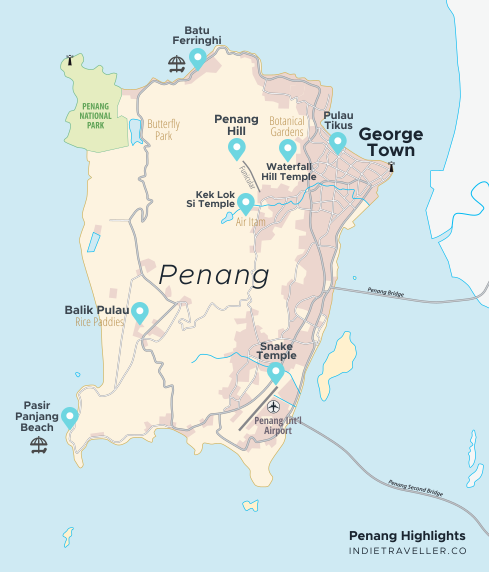
Central hills: Penang Hill & Air Itam
Come to Penang Hill
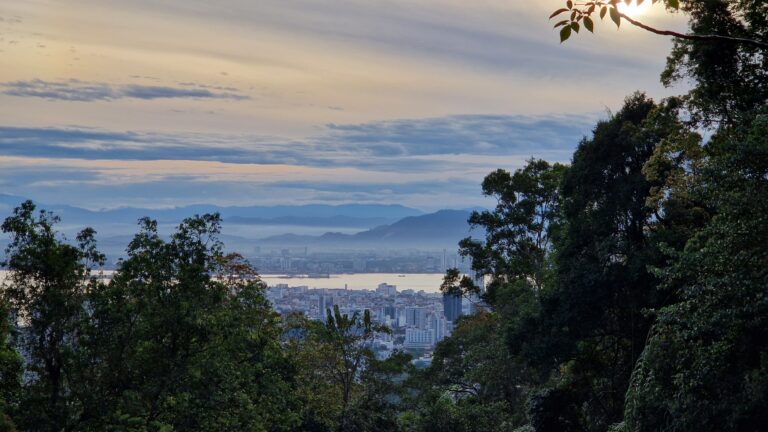
I never need an excuse to climb a hill for a bird’s-eye view of a new city. Penang Hill was high on my wishlist when I first visited, and it didn’t disappoint – even with the hazy skies that are common on the island.
From the top, you get a clear sense of the island’s geography: the narrow strait, the iconic bridges, and Butterworth sitting on the mainland. It’s a refreshing escape from the urban heat and a chance to breathe in some mountain air.
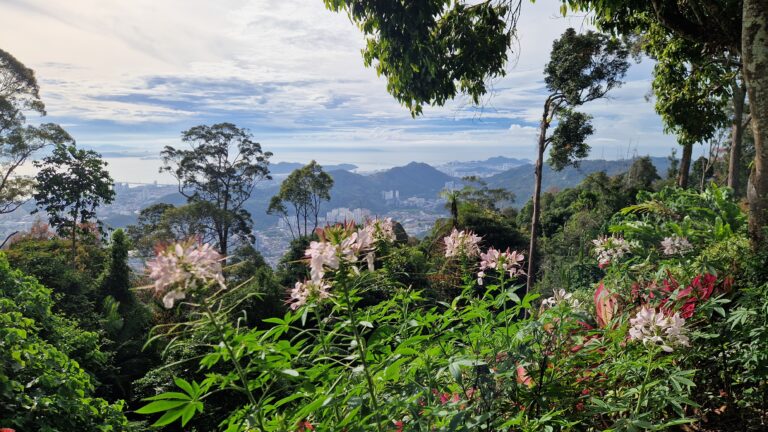
Locally known as Bukit Bendera, this area was originally a colonial station for the British, who were always looking for cooler climates to escape the tropical heat.
While the tourist hub is centered around Flagstaff Hill (735m), the highest point is actually Western Hill (833m). However, Western Hill is used by the military and offers no views, so you can safely skip it.
How to get there:
- Transport: Take Bus #204 from George Town (approx. 45 minutes). It drops you at the bottom station.
- Funicular: Tickets are RM30 return (RM15 one way). Expect to wait 30 minutes; on weekends and holidays, wait times can reach 1 to 2 hours.
- Tip: Come early or late when the queue is shorter. Avoid weekends and holidays. If you’re in a hurry, the Fast Lane ticket (RM80 return) lets you skip the main queue.
- Future: A new cable car is currently under construction and is expected to open by December 2026.
Hike up Penang Hill
If you want to skip the funicular lines and enjoy a bit of a challenge, I highly recommend hiking up the hill. It is a fantastic alternative to the National Park, offering a deep-jungle experience right on the edge of the city.
There are several trails to choose from:
- The Heritage Trail: This is the most popular route as it starts right next to the funicular station. It takes about 1.5 to 2 hours. However, the first half consists of steep, grueling stairs with very little shade. It’s the busiest trail and, honestly, my least favorite.
- The Moon Gate Trail: This is a much nicer experience. It starts at the Botanical Gardens and climbs more gradually. You are immersed in nature, walking in the shade, and have a much better chance of spotting wildlife like monkeys and birds.
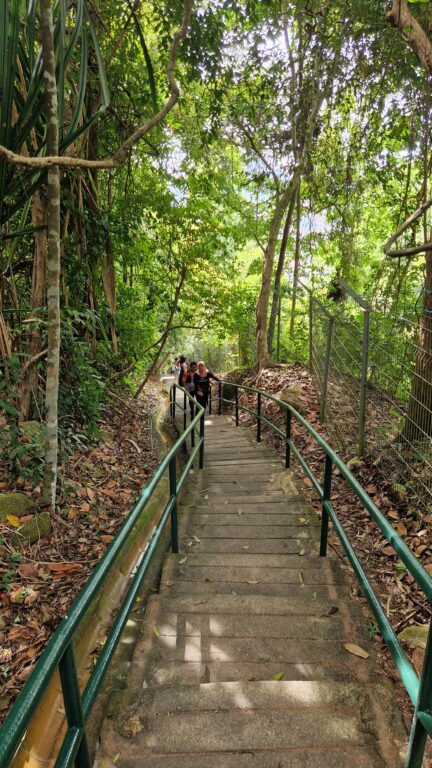
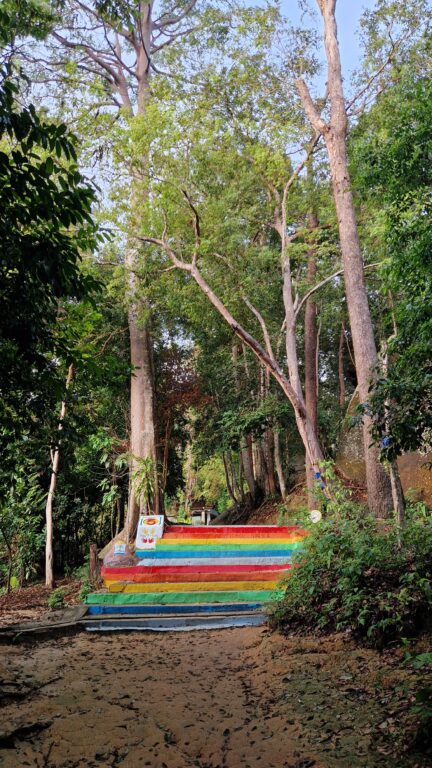
Moon Gate Trail – hiking description
Start at the Moon Gate at the Botanical Gardens and follow the stairs up to Rest Stop 5. Continue straight through the huts toward “Big Rock” which is marked in the offline map.
Eventually, you’ll hit a crossroads where the right path leads toward the Jeep Track. The trail undulates for a while until you reach the road.

From there, you can continue on the steep paved road or follow the path to the Viaduct Station. I usually opt for the road, which leads you straight to the Hindu temple and mosque at the summit.
- Duration: 2 to 3 hours
- Tip: Start early! The air is cooler, and the animals are much more active in the morning.
- Essentials: An offline map (like Organic Maps), sturdy shoes, plenty of water, and mosquito repellent.
Getting down:
- Return via Moon Gate: The most scenic option (1.5 to 2.5 hours)
- Walk down the Heritage Trail: Fast and easy, though a bit tough on the knees (under 1 hour).
- Take the funicular: Grab a one-way ticket for RM15.
- Choosing option 2 or 3 is great if you want to visit Kek Lok Si Temple and the Air Itam Market immediately afterward.
What to do on Penang Hill
Once you reach the top, explore the Hindu temple and the mosque, then head down the main road toward Café Monkey Cup, where you find more view points. The further you walk from the funicular station, the quieter it gets.
While some visitors take electric golf carts, I highly recommend walking. You’ll pass historic villas, towering ancient trees, and fern palms. If you’re lucky, you’ll spot exotic birds and monkeys.
Café Monkey Cup is a fantastic place to recharge and is especially calm during weekdays. It’s tucked away in the greenery and serves great coffee, cake, and sandwiches at fair prices.
If you want a deeper nature experience, visit The Habitat. Their treetop walk is a great spot for birdwatching, and they even offer ziplining for the more adventurous.
Final verdict: Penang Hill is beautiful but touristy. To enjoy it best, go early in the morning on a weekday to beat the heat and the crowds.
Visit Kek Lok Si Temple
After descending from Penang Hill, you can walk from the bottom funicular station to the town of Air Itam in about 15 minutes. From there, it’s a short climb to Kek Lok Si, a site you absolutely shouldn’t miss.
For me, the highlights were the incredible views – especially from the top of the pagoda – and the wonderfully calm vibes.
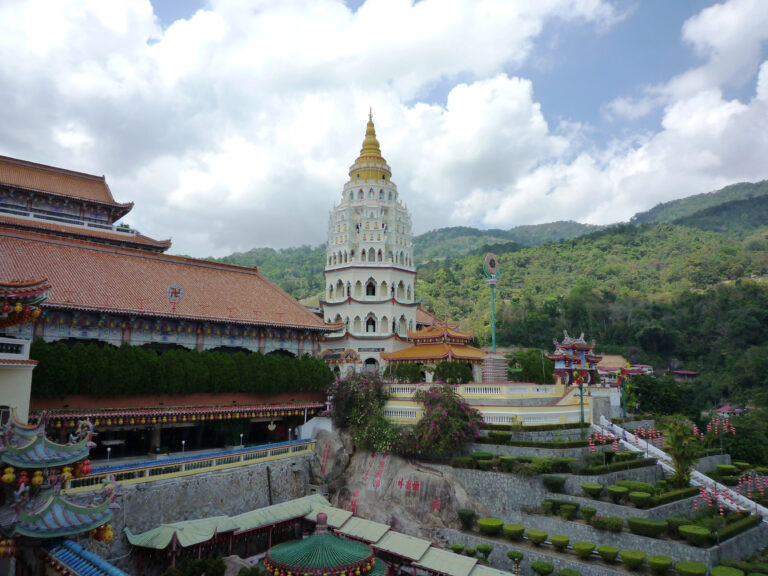
As the largest Buddhist temple complex in Malaysia, it is a vital pilgrimage site. Construction began in 1890, and it is still a work in progress today. The complex is a sprawling labyrinth of temples, pagodas, and shrines, so give yourself plenty of time to explore.
The two main highlights:
- The Pagoda of Ten Thousand Buddhas: This 30-meter tower is unique because it blends Chinese, Thai, and Burmese architectural styles into one structure – a perfect metaphor for the diverse identity of Malaysian Buddhists (entry: RM2).
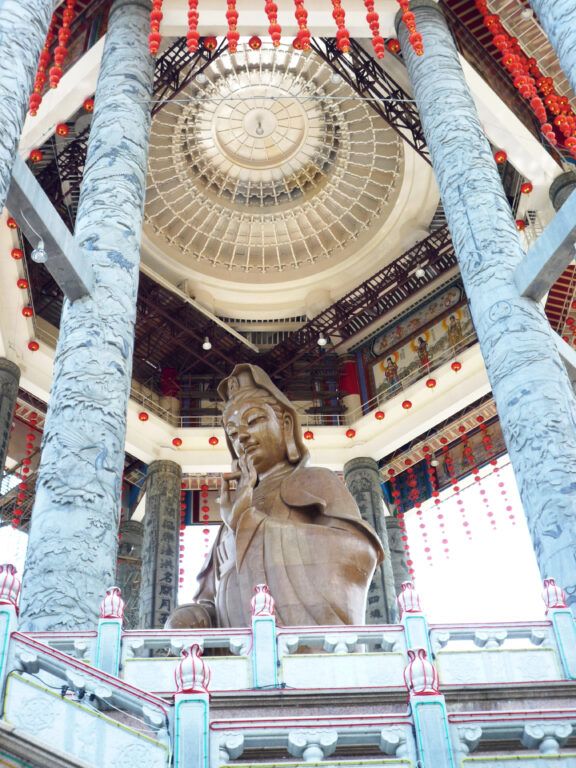
- The Goddess of Mercy (Kuan Yin): This 36-meter bronze statue is impressive. You can reach it via a short lift (RM3 one way) or by walking up the hill road. The views from the pavilion here are arguably the best in the complex.
While some parts of the temple complex can feel a bit “salesy” and crowded, it’s easy to find quiet corners to soak in the spiritual atmosphere and the views.
The guide above walks you through the central hills route, but if you’d rather skip the planning, this GetYourGuide tour handles the full route for you. It’s designed so that you avoid the queues, busy periods & heat and get the most out of Penang Hill. It covers:
- A visit to Kek Lok Si Temple, one of Southeast Asia’s largest Buddhist complexes
- The 7‑Tier Pagoda (10,000 Buddhas) and the big bronze statue
- A funicular ride up Penang Hill to ~833 m
- Epic views of Georgetown
Next, head to the Air Itam Market nearby.
Eat in Air Itam
Just yesterday, I spoke with a local at a bus stop who travels to Air Itam once a week specifically to eat at the market.
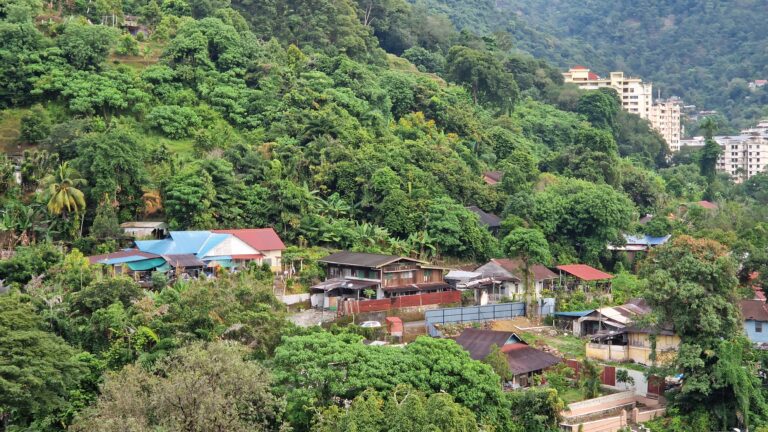
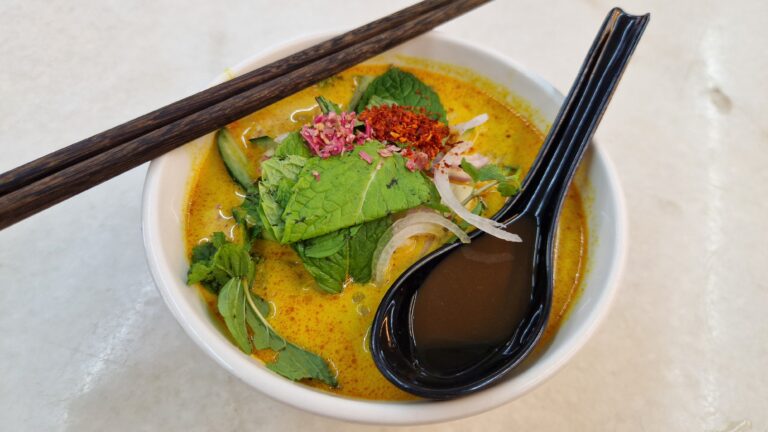
That is always the best endorsement you can get! And I can confirm that the Asam Laksa here is one of the best I’ve ever had in Malaysia.
This dish is a Penang icon: a tangy, spicy fish noodle soup that is an absolute explosion of flavor. What makes it unique is the sour kick from the tamarind (asam). The best place to have it is at this famous Laksa stall. Seven years ago, I had my first bowl at this specific stall and made it a point to return every time I’m on the island.
Note: This famous stall is currently only open on weekends.
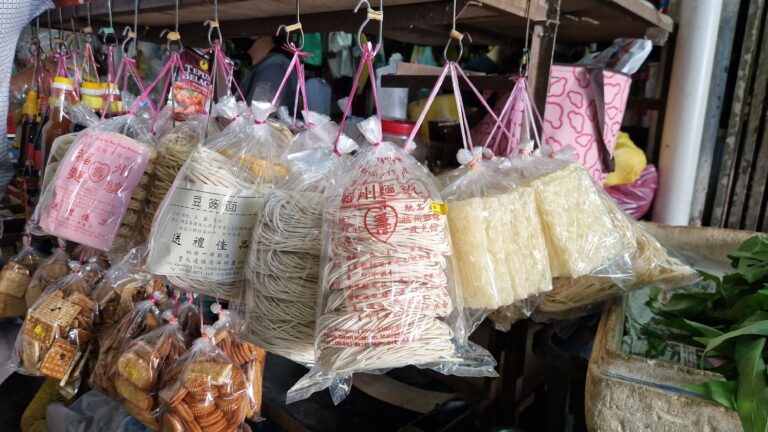
Don’t worry, if you visit during the week, the Air Itam market is widely considered one of the best spots for street food in Penang. If you can’t decide where to eat, just look for the busiest stall; it’s usually a safe (and delicious) bet.
One of my personal favorites is the Sin Ka Oon Bakery. They make incredible butter-cinnamon buns that make my mouth water just thinking about them.
While many European long-term travelers find themselves missing cheese, I always find myself missing high-quality baked goods. For me, this bakery is heaven!
Getting back to George Town: From the Air Itam bus stop, hop on Bus #201, #202, #203, or #502. The ride takes about 30 minutes and costs RM2.
Note: You must have the exact amount in cash, as the drivers do not provide change.
North-central Penang: Botanical Garden & Pulau Tikus
Hindu temples
The diversity of Penang’s population is beautifully reflected in its religious sites, like the Thaneermalai Shree Balathandayuthapani Devasthanam – or simply, the Waterfall Hill Temple. This is the largest Hindu temple on the island.
What makes it unique is its stunning location, nestled into the greenery of the hillside next to the Botanical Gardens. If you can handle the climb of over 500 steps, you’ll be rewarded with a spectacular view.
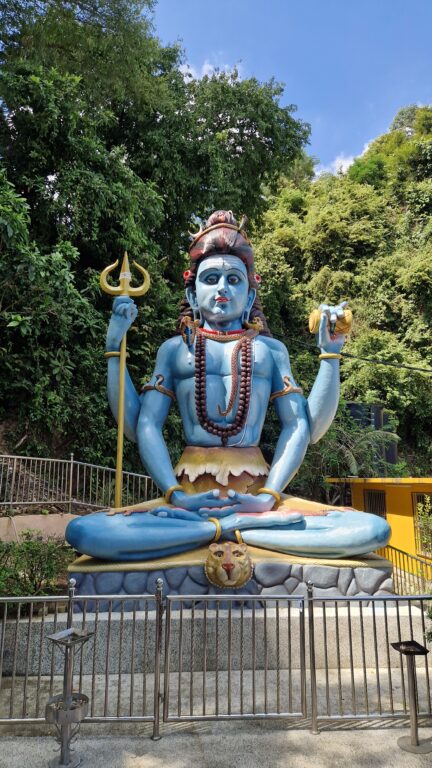
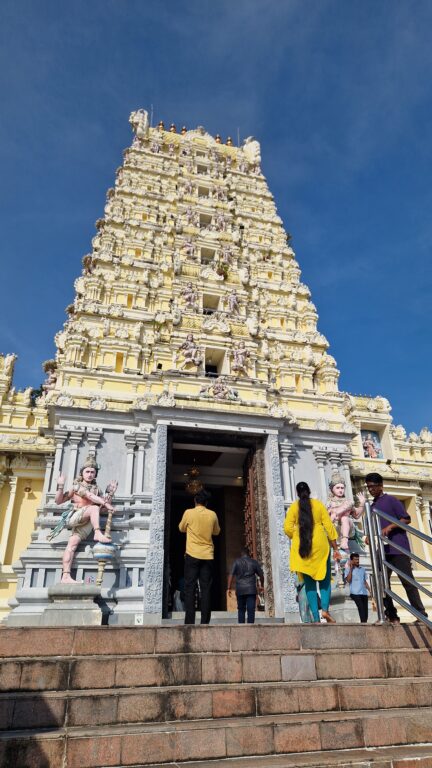
At the base of the hill, you’ll find even more colorful temples, each trying to outdo the other with intricate details, religious paintings, and expressive statues.
These temples play a central role during Thaipusam, a vibrant Hindu festival held every January or February.
You may have seen photos of devotees at the Batu Caves in Kuala Lumpur with metal needles piercing their faces or backs during the procession. It is an extraordinary sight; devotees often enter a trance-like state to overcome pain, seeking to cleanse themselves or fulfill a vow.
Penang is actually one of the best places to experience Thaipusam, as it offers an authentic atmosphere without the overwhelming crowds found in KL.
How to get there: There is no direct bus from George Town to the temples or the Botanical Gardens. You could walk for about 30 minutes from the nearest bus stop along busy roads, but taking a Grab-taxi is definitely the more convenient and recommended choice.
The Botanical Garden
Once you’ve explored the temples, head over to the Botanical Gardens for a peaceful stroll. Often overlooked by tourists, this garden is a hidden gem for nature lovers and a perfect gateway into the jungle.
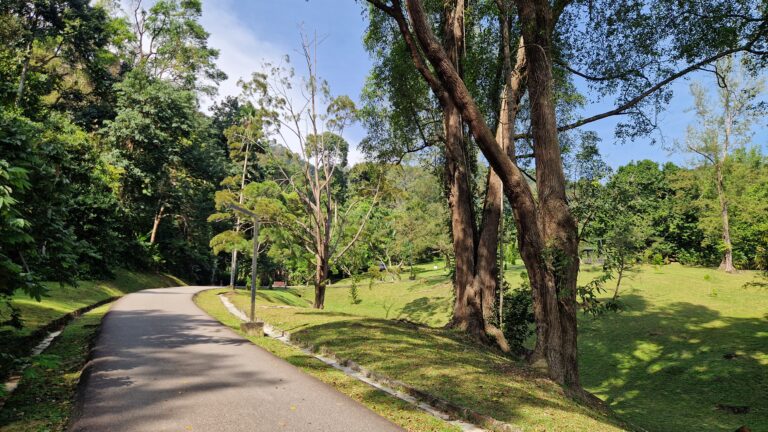
The park is situated in a lush valley surrounded by rainforest, and many of the island’s best hiking trails originate here. Even a short walk within the garden is rewarding; keep an eye out for monkeys playing in the trees and tropical birds or butterflies fluttering through the canopy.
While the main paths feel like a well-kept city park, the smaller trails leading to the Lily Pond or the Secret Garden have a real jungle vibe.
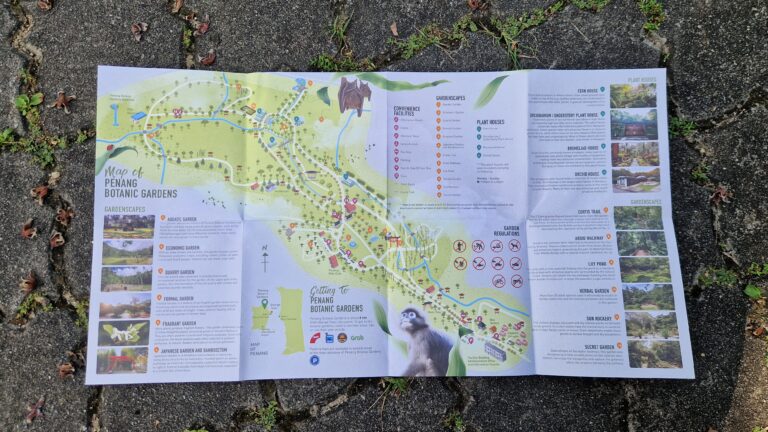
A quick warning: The local macaquesare cheeky thieves! They are always on the hunt for food, so make sure to pack all snacks, water bottles, and plastic bags securely inside your backpack.
If you’re looking for a little more adventure, you can jump onto the Moon Gate Trail from here. A popular short route leads up to “Rest Stop 5.” From there, you can head back the same way or take a different path down toward “Rest Stop 3” and the Youth Park.
Tip: Download Organic Maps (offline) before you go. All the rest stops and connecting trails are marked, making it easy to navigate or even extend your hike.
Thai & Burmese Temples
Located in the Pulau Tikus neighborhood, just 3 kilometers from the Botanical Gardens, are two temples that are a must-see for culture enthusiasts – especially if you haven’t visited Thailand or Myanmar yet.
First is Wat Chaiya Mangalaram, a classic Thai Buddhist temple. You’re greeted at the entrance by fierce temple guards and colorful naga serpents. When the sun hits the mosaic tiles, the entire structure seems to glow.
Inside, you’ll find an impressive 32-meter-long reclining Buddha that dominates the hall. Surrounded by burning lotus candles and offerings, the temple has a wonderfully warm and calm atmosphere.
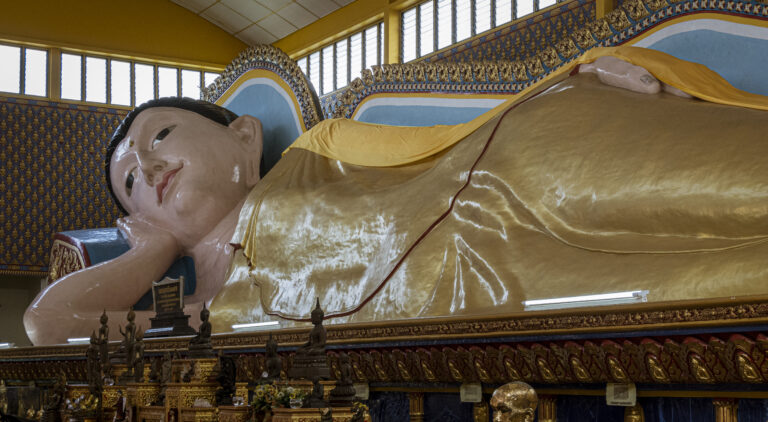

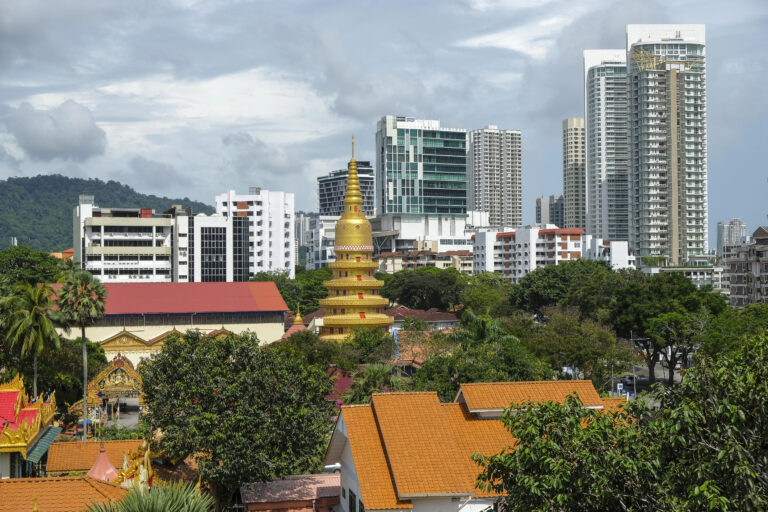
Directly across the street is Dhammikarama, a Burmese temple with a completely different vibe. It is set in a beautiful garden filled with shrines, trees, and ponds where fish and turtles paddle around. The main feature is an 8-meter-tall standing Buddha framed by exquisite wood carvings.
Insider Tip: Head to the back of the complex on the left side to find another building. Follow the stairs to the roof for a beautiful panoramic view of the surroundings.
Pulau Tikus Market
After the temples, head to the nearby Pulau Tikus Market. This is a fantastic place to experience an authentic local market away from the usual tourist crowds.
The wet market is busy in the morning with locals buying fresh produce, but the real draw is the food stalls around the corner.

Be sure to try:
- Char Koay Teow: Smoky stir-fried noodles
- Apom Manis: Sweet, thin pancakes with peanuts
- Lemak Laksa at Granny Q: Unlike the sour Asam Laksa found elsewhere, Lemak Laksa uses coconut milk and kaffir lime leaves, making it creamy and reminiscent of a Thai curry
How to get there: Many buses (#101, #102, #103, #104, and #304) head to Pulau Tikus from George Town.
Southwest countryside: Balik Pulau & Rice Paddies
Editor’s pick: A great way to experience Penang’s quiet countryside is on this cycling trip. It’s one of the most rewarding things to do in Penang, cruising through farms and villages like Balik Pulau, exercising, learning, and getting a real taste of everyday local life.
book a Countryside Cycling Tour hereBalik Pulau: The Green Countryside
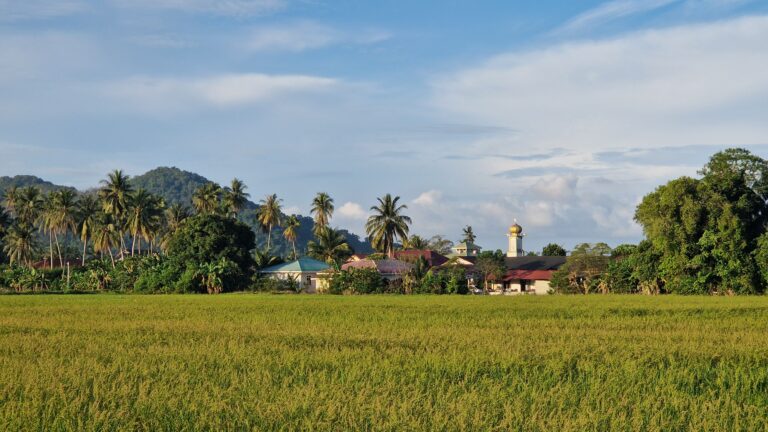
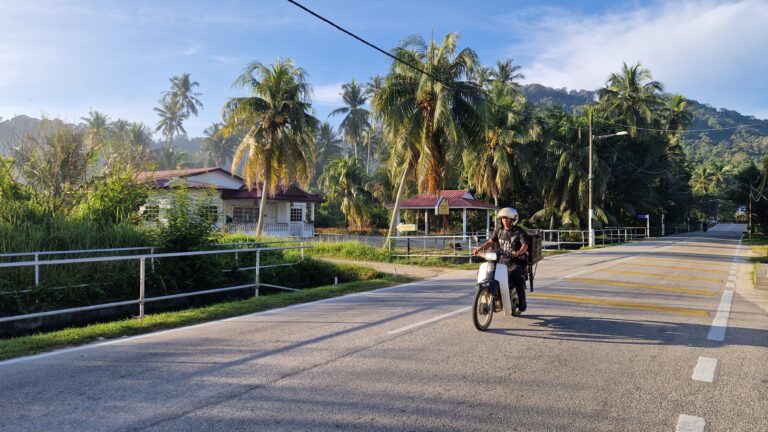
Located in the southwestern part of the island, this area is a rural oasis of farmland and rice paddies.
Strolling through the rice fields early in the morning is a joy. The lush green crops, clean air, and mountain backdrop are refreshing and – at least for me – instantly bring a smile to my face. It offers the quiet, slow-paced side of Penang that the developed north is missing.
What to do in Balik Pulau
- The Rice Paddies: Explore the fields west of the town or outside of Genting (Rice paddies Balik Pulau & Rice paddies Genting). They are surrounded by small villages and fruit plantations growing nutmeg, bananas, and sugarcane.
- Pasir Panjang (Long Sand Beach): an idyllic, quiet beach where you’re more likely to see local fishermen than tourists.
- Try the food: Check out Kim Laksa (a local vendor), it’s highly recommended by locals!
- Look for the large street art murals around town, especially the famous “Old Fisherman.”

How to get there:
- Bus #502: The fastest route from George Town (via Air Itam), taking a little over an hour (RM5).
- Bus #401E: Takes about 90 minutes but stops at the Snake Temple and the Airport (RM4).
Travel Tip: The best way to see the countryside is to rent a scooter or join a guided bicycle tour.
The Snake Temple
This next stop has some very unusual residents: poisonous green pit vipers.
Known simply as the Snake Temple, these snakes “chill” on branches and wooden frames, roaming freely through the prayer halls and gardens.
Legend says the snakes moved in on their own when the temple was completed in 1850, and the monks have cared for them ever since.
Today, as natural habitats on the island decline, the temple and its breeding center help the species survive.
In a strange way, the snakes are fascinating to watch. They are very sluggish during the day, which allows you to get surprisingly close to an animal you’d normally run away from in the wild!
How to get there: Take Bus #102, #401, or #401E. It is located in Bukit Gedung, near the airport, making it a perfect stop on your way to Balik Pulau.
North coast: Batu Ferringhi & Penang National Park
Batu Ferringhi: beach & action
Batu Ferringhi is Penang’s most famous beachside town, home to several large resorts that are popular with families and locals alike. While it’s the easiest place to get to the beach on the island, I have to be honest: if you are looking for a nice beach getaway, I prefer the beaches on Langkawi or the East Coast of Malaysia.
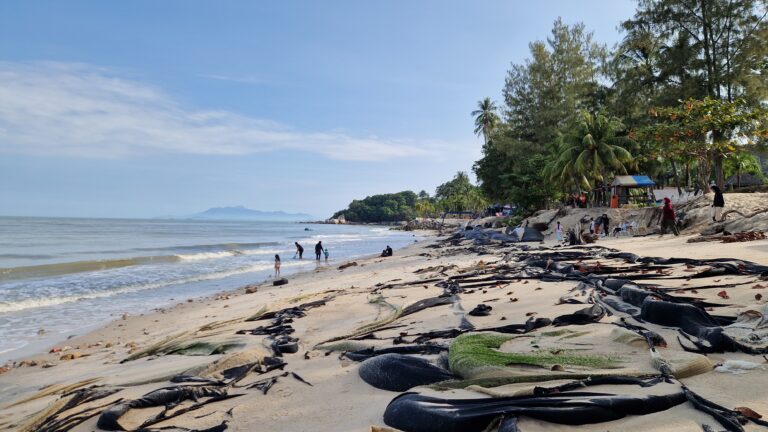
The beach at Batu Ferringhi is a bit too busy with banana boats and jet skis for my liking. It’s also quite eroded in places, and the water is murky and often infested with jellyfish. While it might look nice in photos, there are definitely better places if you actually want to go for a swim.
However, Batu Ferringhi still has plenty to offer for a relaxing evening. Every night, the town transforms with a lively night market along the main road. If the weather is clear, many beach bars also put on impressive fire shows.
Beyond the beach, Batu Ferringhi serves as the gateway to some of the island’s best family attractions, including a butterfly park, a tropical spice garden, and the massive Escape adventure park.
How to get there:
- Grab-Taxi: The easiest and fastest way.
- Bus: Take Bus #101 or #102 from George Town. The bus stops are conveniently located near all the major attractions.
Attractions near Batu Ferringhi
Tropical Spice Garden: Just down the road is the Tropical Spice Garden, located on a former rubber plantation. This beautiful, park-like space is filled with trails and streams.
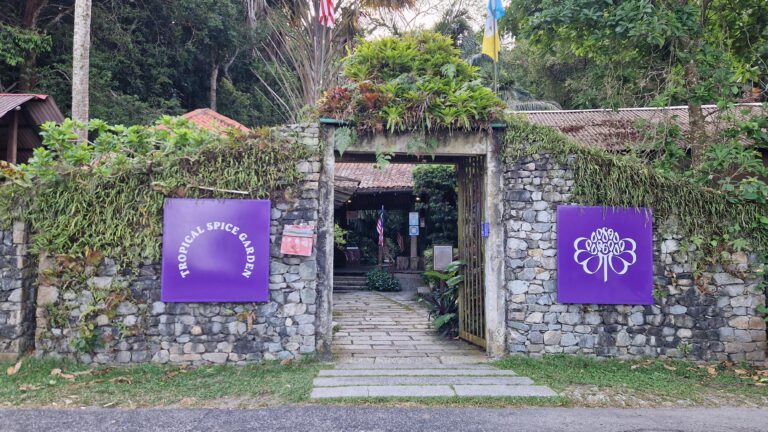
It’s a great place to learn about the herbs, spices, and fruits of this area. You can choose between a self-guided audio tour or a guided tour in person. If you’re a plant lover, a hobby gardener, or a cook, you’ll find this place incredibly peaceful and interesting.
get your Entrance Ticket & Guided TourEntopia Butterfly Park: Around the corner in Teluk Bahang is the butterfly park – my favorite. You walk through a massive tropical enclosure where thousands of butterflies glide around your head—some might even land on you!
It feels like a little Garden of Eden, with 15,000 butterflies fluttering amidst lush vegetation. The feeding stations are the best spots to get a close-up look at the mesmerizing colors and patterns of different species.
Beyond the butterflies, you can also explore sections dedicated to exotic insects, frogs, and reptiles. We spent two hours here and completely lost track of time; it’s a must-visit for nature photographers and families.
get your entry ticket ($15) hereEscape Penang (theme park & water park – all in one): Located right next to the butterfly park, this one is for the thrill-seekers. Escape is part adventure park and part water park.
It actually holds the Guinness World Record for the longest tube water slide in the world (over 1.1km long!). I haven’t braved the slides myself yet, but the videos of the jungle zip-lines and massive water slides look intense.

Tip: Buy your tickets online in advance! Escape uses dynamic pricing, so check their website to see which day of your trip offers the best deal.
Is Penang National Park worth it?
For years, I recommended the Penang National Park to every traveler. Today, I’m conflicted. The park has unfortunately suffered from neglect. Many trails are in poor condition, and the famous canopy walkway has been closed indefinitely with no plans to reopen.
Recently, I talked to another backpacker who had just returned from the park; she said that currently, only the trail to Turtle Beach (3 hours return) is open. The ranger advised her to take a boat to Monkey Beach because the path is currently unsafe.
Additionally, the Turtle Conservation Center inside the park blurs the line between conservation work and being a tourist attraction. Rather than releasing all turtles once they are old enough and healthy, some seem to be kept purely for display.
Is it still worth the trip? In my opinion: not for the moment.
Between the high entrance fee for foreigners (RM50) and the limited trails, the “value for money” just isn’t there anymore – especially considering it takes over an hour to get there from George Town. But I recommend doing your own research and deciding what’s right for you.
Alternatives for Penang National Park
If you’re looking for a great jungle experience, hike Penang Hill instead. The trails are free, well-maintained, and offer a similar chance to encounter wildlife.
On my most recent hike, I spotted black dusky leaf monkeys, macaques, a 20cm-long millipede, and the rare Greater Racket-tailed Drongo.
Instead of a beach, views of the city are your reward, accompanied by the “jungle orchestra” of buzzing cicadas and chirping birds.
Other options:
- The Botanical Gardens – great for relaxing strolls and monkey-spotting
- Iron Waterfall (Titi Kerawang) – a short walk located near Batu Ferringhi
Travel tips for Penang

When to visit
You can visit Penang year-round. It is always warm, and the rainy season is generally less intense than in other parts of Southeast Asia.
- December to February: High season. The weather is dry and pleasant, but expect more crowds.
- March to May: Calmer and hotter with occasional light rain.
- June to November: Rainy season. You’ll experience brief, heavy showers in the afternoon or at night. September and October usually see the highest rainfall.
How many days for Penang
I recommend planning 3 to 5 days for your visit:
- Days 1–2: Explore George Town’s street art, museums, and world-class food scene.
- Day 3: Combine Penang Hill with Kek Lok Si Temple and the Air Itam market.
- Days 4–5: Venture to the “hidden” side of the island—Balik Pulau, the Butterfly Farm, or go hiking.
How to get to Penang
By plane
Flying is the easiest option. Many budget airlines fly from Kuala Lumpur and other Southeast Asian hubs.
- The airport is 18km from George Town.
- Bus: Follow the signs to the bus stop outside the terminal. Buses #102, #401, #401E, and #502 all head toward George Town. The ride takes about an hour, though traffic can extend that time.
- Grab: A Grab-taxi is inexpensive and usually gets you to the city center in about 30 minutes.
By train
Butterworth serves as the primary rail gateway for the island.
Traveling by train along the west coast is not only convenient but also a great way to avoid the weekend highway traffic.
The fast ETS trains offer long-distance connections to Kuala Lumpur and the south, while the cheaper KTM Komuter trains stop more frequently and are ideal for shorter trips from places like Ipoh.
By bus
The mainland’s central transit hub also handles a massive volume of long-distance buses.
While many coaches continue across the bridge directly to Komtar in George Town, I actually recommend getting off at the Butterworth station.
The bridge traffic can be so heavy that staying on the bus often takes much longer than taking the ferry.
book a bus from kl to butterworthBy ferry
It’s only a short walk from the train and bus platforms to the ferry terminal.
There, you can quickly buy your ticket (RM2 via credit card or eWallet) and hop on the next boat.
The ferry operates from roughly 6 AM until after midnight, running every 20 minutes during the day and every hour late at night.
It’s the most iconic way to arrive!
How to get around Penang

George Town is highly walkable and it’s the best way to experience the old town. (Don’t miss my in-depth guide to George Town for the best things to do there!)
To explore Penang at large, you’ll need some transportation. If you’re not visiting attractions as part of a guided tour, then the following transport methods will let you do so independently.
By bus
For longer distances, the Rapid Penang bus network is reliable and very cheap.
Payment: You must pay in exact cash; drivers do not give change.
Important routes for travellers:
- 101 & 102: Batu Ferringhi & National Park (RM3-4)
- 102 & 401: Airport (RM3)
- 201, 202, 203 & 502: Air Itam & Kek Lok Si Temple (RM2)
- 204: Funicular to Penang Hill (RM2)
- 502 & 401E: Balik Pulau (RM4–5)
- CAT: Free bus service circling in the city center of Geroge Town
Use Google Maps to find bus stops, timetables and bus routes.
By Grab
Grab is the Southeast Asian version of Uber and was actually founded in Malaysia. It is safe, reliable, and transparent with pricing.
Just download the app and create an account using your phone number (you can use your number from home). Make sure you can receive a verification SMS, which is necessary for registration.
Also, link your credit card to the app so you don’t have to worry about cash or the driver having change.
By motorbike
I only recommend renting a scooter if you are an experienced rider.
Unlike the chill backroads of Thailand or Laos, Penang’s traffic in the east is intense, and drivers can be reckless.
If you do decide to ride, ask your accommodation for a reputable rental recommendation.
Final thoughts
Penang truly is an incredible island with a soul that goes far beyond the city walls of George Town. Whether you’re hiking through the jungle, eating laksa at a local market, or watching vipers in a temple, I hope this guide helps you experience the magic of the island.
Enjoy Penang!
Keep planning your Malaysia adventure with our other guides! Start with this Kuala Lumpur itinerary to explore the capital, then head to the iconic George Town where you can jump on a day trip to the Cameron Highlands. Or you can veer off the west coast path to the Perhentians, a set of laidback, rustic islands with excellent snorkeling, diving, and jungle trails.




All comments are moderated before they appear.