
When I first stepped onto the streets of George Town 15 years ago, I had no idea I’d still be coming back today. After spending nearly half a year here in total, the city has stopped feeling like a stopover and started feeling like home.
In this in-depth guide, I’ll share about George Town not just from the perspective of a quick visit, but as someone who’s revisited it and seen it evolve.
George Town is one of those rare places that manages to be both high-energy and incredibly laid-back. It’s a multicultural jigsaw puzzle where mosques, Buddhist shrines, and Hindu temples sit side-by-side with Chinese shophouses and European heritage buildings.
The crumbling charm of the old town and the world-renowned murals are matched only by the mouth-watering street food that draws travelers from across the globe.
So, whether it’s your first visit or your fifth, I want to help you experience George Town on a level that most travelers miss.
What makes George Town so unique
The Old Town
In 2008, George Town officially became a UNESCO World Heritage Site, which enabled the city to invest in itself and restore many of its old shophouses, temples, and mosques.
That saved it just in time and preserved a unique and charming old town that blends its multicultural heritage in a wonderful way.


It’s a constant work in progress, which I’ve witnessed firsthand. The old town is much more attractive now than when I first visited in 2011. Walking through the maze of historic streets, you’ll still find plenty of crumbling buildings, but also beautifully restored ones that keeps its heritage alive.
It reminds me a bit of Chinatown in Singapore, as there are many similarities. But for my taste, Singapore is a bit too polished.
George Town’s old town has more character, is far larger, and feels more alive. It’s a joy to wander the streets, admire the architecture, and visit its many historic sites and religious places of worship.
A multicultural melting pot
Penang is a true melting pot of cultures, which you can see reflected in the diverse array of mosques, Buddhist shrines, and Hindu temples. Over the years, immigrants — especially from China and India — have come to George Town and stayed.

They integrated with the local population while maintaining their own religions, traditions, languages, and cuisines. And immigration hasn’t stopped. Malaysia continues to be a desired destination today. Nowadays, many refugees from Myanmar arrive here, along with people from neighboring countries seeking a better future.
This constant influx adds even more layers to Malaysia’s diversity. Food is perhaps the best example of this multicultural identity.
The amazing food
The food is one of the reasons I love staying in Penang. It just never gets boring — there’s always a new spot to try. Each day, you can decide if you’re in the mood for Malay, Indian, or Chinese food.
Locals feel the same way; on the weekends, many travel to George Town just to savor the food.
Lines at popular restaurants and food stalls get longer – which is usually a good sign. I often return later in the week when it’s calmer.

The good thing about staying longer in George Town is that I’ve found my favorite food spots. Just last night, I went to a Curry Mee stall. The woman there looked at me and asked, ‘The usual?’ I nodded and sat down while she freshly prepared my bowl of soup.
George Town is one of the best places to eat in Malaysia, and Penang is famous for its unique versions of classic Malaysian dishes shaped by the different ethnicities that call George Town home.
You’ll find amazing Malay, Chinese, and Indian food, alongside Indonesian, Vietnamese, Burmese, and Thai cuisine. I’ll share more tips on what and where to eat further down in the article!

Where to stay
Most visitors stay in George Town’s old town, essentially because that’s where most sights are. It’s definitely convenient, but it comes with a trade-off. Many accommodations are in old heritage buildings that can feel a bit dated and lack natural sunlight.
That’s why most of my recommendations focus on modern hotels just outside the old town, with a couple of exceptions that genuinely stand out: Some Place Else Hostel and Campbell House.

Best places to stay in George Town by budget
- Budget hostel – Tido Hostel: I’ve stayed here many times. They offer both private rooms and dorms. The lounge on the 5th floor has amazing views, though the bathrooms could use some improvement.
- Social hostel – Some Place Else: a cozy hostel on Muntri Street with plenty of communal spaces and daily activities. Great for connecting with fellow travelers.
- Budget hotel – Forum Hotel: a simple, clean, and modern choice. Just note that the cheapest rooms don’t have windows, though most do.
- Mid-Range hotel – JEN Georgetown: a 4-star hotel with all the amenities—pool, gym, breakfast, parking garage, and stunning city views. Very convenient and comfortable.
- Boutique hotel – Campbell House: located in a historic building with colonial charm and grandeur. Everything here is superb, elegant, and cozy.
- Heritage boutique hotel – Cheong Fatt Tze – The Blue Mansion is a heritage boutique hotel and Crazy Rich Asians filming location, defined by its iconic indigo-blue facade and atmospheric colonial-Chinese decor. The mansion also operates as a museum open to visitors, but if you’re looking for a one-of-a-kind heritage stay, you can stay in one of its 18 cheerful rooms.


What to do in George Town
Begin with the ferry! The most scenic way to reach Penang
There’s no better way to arrive in George Town than by ferry. While Penang can feel dense and urban, the ferry ride offers a stunning view of the green hills that form the backbone of the island.
This quick 15-minute crossing offers a far more scenic arrival than being stuck in traffic on a bus or taxi from the airport. Another benefit is that the ferry terminal is located right next to the Butterworth train and bus station.
When traveling along Malaysia’s west coast, the train is easily the most comfortable mode of transportation. You can also take a bus to Butterworth, which often offers more connections than George Town itself.

With its mix of cultures and flavors, George Town is best navigated with a local who knows exactly where to find the best eats!
See details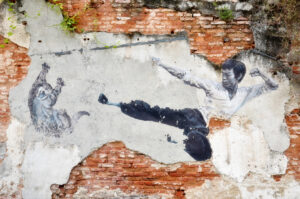
A free GuruWalk tour inside the historic core of George Town and its people, architecture, and history
See details
Venture just outside George Town on a guided bike tour through the rural countryside of Balik Pulau and cycle past early-morning village life
See detailsAll available experiences on GetYourGuide
2. Wander the colorful streets
Once in George Town, you really need to experience it on foot.
Even after staying for months in George Town, I still like to go for a walk at night with no concrete plans. The atmosphere is so calm and cozy; that’s when the old town is at its most charming.
A good starting point for your exploration is Armenian Street. While it is undeniably touristy, it’s also home to many sights, including the famous “Little Children on a Bicycle” mural.

Here you’ll also find Chinese clan houses, temples, and museums.
- Take a picture of Seh Tek Tong Cheah Kongsi from Beach Street
- Stop by at Poh Hock Seah Temple and Choo Chay Keong Temple
Continue until you reach Armenian Park, then turn left onto Aceh Street.
Make a quick detour to Cannon Street, where you’ll find small street art pieces, like a boy in a yellow shirt standing on a chair and several cat murals. Stop by the mosque and continue walking down Aceh Street until you reach Beach Street. Along the way, you’ll discover many cute little shops and cafés.
Don’t miss Muntri Street, one of my personal favorites, where large murals are fading away and the calm Thean Hou Temple is located. Nearby Campbell Street is also very photogenic, and the crumbling buildings of Malay Street add a raw, authentic charm to the area.

Afterwards, follow your own curiosity and get lost in the maze of beautiful streets – there’s no right or wrong way to explore. You’ll find something beautiful or interesting around every corner.
3. Look for Street Art
When wandering around town, always keep an eye open for street art – you’ll find it everywhere.
It all started around 2009 when the first street art pieces were commissioned. The big breakthrough came in 2012 when Lithuanian artist Ernest Zacharevic created unique murals that incorporated 3D elements, like old bicycles and chairs.
That put Penang on the map as the street art capital of Malaysia.

In the following years, the city has invited renowned artists to create new works, turning George Town into a public street art gallery.
While some older pieces are fading, new ones are constantly appearing. You might spot the green dog “Chaigo” by Malaysian artist Kenji Chai, or recent murals by Thai artist Alex Face. The only challenge is finding them.
Popular pieces are marked on Google Maps, while Organic Maps (OpenStreetMap) lists so many that it can feel overwhelming. Treat it like a scavenger hunt and enjoy the search!
Check also out my Penang Street Art Guide. It’s hosted on my German blog, so just hit ‘Translate’ in your browser to unlock all the pinned locations and make your search easier.

4. Discover the Chinese heritage
You will quickly notice that George Town is heavily influenced by Chinese culture. This dates back to the 18th century when Chinese workers arrived, encouraged by the colonial government. They stayed, married local women, and organized themselves into clans (Kongsi) to support one another, since they received no help from the government.
To this day, Chinese descendants play a vital role in George Town’s economy and cultural diversity. Chinese festivals like Chinese New Year, Hungry Ghost Festival (Phor Thor), and Chingay Parade are celebrated big in Penang.
All over town, you’ll find remnants of ancient Chinese temples, clan houses, and mansions of wealthy merchants.

If you only have time for a few, I recommend:
- Temple of the Goddess of Mercy – The oldest Chinese temple in town, which has a great atmosphere
- Pinang Peranakan Mansion (RM 30) – A glimpse into the posh lifestyle of a wealthy merchant in the early 20th century
- Leong San Tong Khoo Kongsi (RM 15) – An impressive clan house and temple that now serves as a museum
Other clan houses worth visiting include Seh Tek Tong Cheah Kongsi, Eng Chuan Tong Tan Kongsi, and Teoh Kongsi. Free options include the temples on Armenian Street and the ancestral temples on King Street (at the corner of Church Street).

5. Explore Little India
These old colonial buildings form a startling contrast to nearby Little India. Strolling down King Street, Queen Street, or Penang Street, you’re instantly transported.
It is a wonderful sensory overload:
- The aroma of burning incense and Indian food.
- Loud Indian pop music blaring from storefronts.
- Blinking lights and a sea of brightly colored dresses.
Welcome to Little India!


Nowhere else in town will you find such a dense mix of Indian clothing stores selling colorful saris, gold jewelry shops, and Indian restaurants.
While Little India doesn’t have many major sights, it is home to Sri Mahamariamman Temple, the oldest Hindu temple in the city. It’s a tiny but colorful temple with a striking tower above the entrance which is decorated with dozen of figurines.
Even more iconic is the Kapitan Keling Mosque, dating back to 1800 and built by Indian Muslims. You can visit outside of prayer times if dressed appropriately.

For me, the main joy of Little India is simply wandering around, browsing the stores, and eating amazing Indian food.
- Try samosa: Delicious, triangular deep-fried pastries filled with curry. A great snack!
- Visit a general store: These are fascinating to browse, selling everything from exotic spices and cookware to supplies for home altars.
6. Dive into the street food
George Town is famous for its hawker centers – clusters of street food stalls where each vendor usually specializes in one specific dish. It is the best way to eat: cheap, and authentic.
While some are open during the day, the night markets are a fantastic place to try new food. They usually start around 5 PM and run until 11 PM (or when the food is finished).
If you’re unsure which stall to pick, look for the one with the longest line—you can’t go wrong with that!

Popular night markets in the city center:
- Padang Kota Lama Food Court: Perfect for sunset. It’s located on the promenade, great for families, and offers views of the sea.
- Carnarvon Street (closed Mondays): A tourist favorite with a great variety of classic dishes.
- Kimberley Street: Busy and great food selection (some stalls even have a Michelin Star).
- New Lane Hawker Centre (closed Wednesdays): A bit more relaxed with plenty of seating.
- Presgrave Street Hawker Centre: Famous for Chinese food like Hokkien Mee, Oyster Omelette, and Cendol.

If you’re feeling overwhelmed by the sheer number of stalls or you want to go deeper on Malaysia’s culinary heritage, then I highly recommend joining a food tour. A local guide can introduce you to more dishes, take you to hidden spots only locals know, and explain the origins of each dish.
I suggest doing a food tour on your first day, so you can use your new knowledge during the rest of your stay (or your trip through Malaysia).
7. Try typical Malaysian dishes
Food plays such an important role in Malaysia—it reflects the nation’s heritage, and George Town is one of the best places to indulge.


Here are a few dishes which Penang is famous for:
- Char Koay Teow: Stir-fried flat rice noodles with prawns, egg, bean sprouts, and chives, with a smoky flavor. Vegetarian versions are available.
- Asam Laksa: A tangy, spicy fish noodle soup made with shredded fish, tamarind, chilies, fresh herbs, and pineapple.
- Hokkien Mee: A rich, aromatic prawn and pork bone broth served with a mix of two types of noodles.
- Nasi Kandar: Buffet-style Indian restaurant where you choose from various curries, vegetables, and meats—filling, flavorful, and affordable.
- Cendol: A refreshing dessert of shaved ice, green jelly noodles, red beans, coconut milk, and palm sugar. Perfect for hot days or after spicy meals.
8. Come to the Clan Jetties
Another interesting relic of Chinese immigrants is the so‑called Clan Jetties – communities of stilted houses built over the water on the southeastern shore.
They were built by families from the same Hokkien village from southeast China to create a community and to support one another in the new homeland. To this day, families live in these stilted houses, which are now modernized and connected to the main water supply and electricity grid.

At Tan Jetty, you can still see the old outhouse – a stark reminder that sewage once flowed directly into the sea.
George Town has seven clan jetties, all open to visitors. Please remember to be respectful, as these are private homes.
- Chew Jetty: The most popular (and most touristy) one.
- Tan Jetty & Lee Jetty: For a much calmer experience, head south.
- Yeoh Jetty: Even quieter and more local.
- Hean Boo Thean: The golden floating temple , a hidden gem that few tourists visit.
I especially loved visiting the southern Clan Jetties around sunset. I sat down on the wooden planks and watched the light dance on the water while a light breeze blew in. Birds were flying by – I even spotted a sea eagle. It was such a magical, calm atmosphere. Only a few other people were around, taking pictures or simply enjoying the moment. It’s such a beautiful, peaceful contrast to the bustling city streets.


9. Visit Colonial Remnants
Back in the heart of George Town, you’ll find grand colonial buildings erected by the British, the East India Company, and wealthy merchants. A great place to start is the northern end of Beach Street.
This area used to be right on the shore, serving as the city’s commercial pulse when Penang was a vital trading port for tin and rubber.
As you walk, look up at the facades. You’ll see names like “India House” or the year the masonry was laid. At the end of Beach Street stands the Moorish-style Queen Victoria Memorial Clock Tower. If you look closely, you’ll notice a slight tilt – caused by Japanese bombing during World War II.
Just steps away is Fort Cornwallis, the British base on Penang. While it is currently undergoing renovation, it remains an impressive sight from the outside, especially when viewed from the Esplanade. This lawn is flanked by two more architectural icons: the pristine white City Hall and the historic Town Hall.
That rounds up our colonial excursion. You’ll spot more of these relics scattered throughout town, but these are the most important ones.
How to get to George Town
By plane
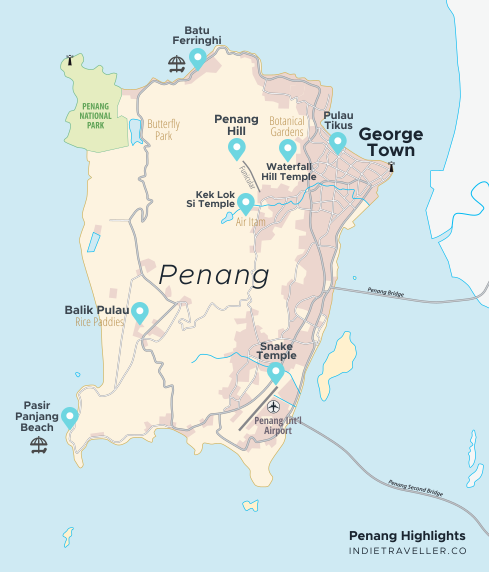
Penang is well-connected by air to Kuala Lumpur and other major destinations across Southeast Asia. The airport is located in the southeast of the island, roughly 18 km from George Town.
From the airport, you can take a public bus into the city. Simply follow the signs to the bus stop outside the terminal building.
You can take bus #102, #401, #401E, or #502 to George Town. The journey usually takes an hour or more. Check Google Maps for schedules and details, as the information is generally quite accurate.
A more convenient option is a Grab taxi (the Southeast Asian equivalent of Uber). You can order a car through the app and pay digitally or with cash. Depending on traffic, the ride from the airport to the city center typically takes about 30 minutes or longer.
By train
The Penang Sentral train station is located on the mainland in Butterworth, right next to the ferry pier. From Kuala Lumpur, the ETS train is the fastest connection to Penang Sentral.
A more affordable option is the slower KTM commuter train, which makes more stops along the way and is better for shorter distances, such as to Ipoh.
Tickets can be purchased directly at the train station from a ticket machine or book in advance on 12Go.
Check all train trips on 12goBy bus
There are numerous buses heading toward Penang, but you should check the arrival point carefully, as the state of Penang has several different bus stations.
For travelers, the best destinations are Butterworth and Komtar in George Town.
- Butterworth: This is often the better choice, as there are more connections and it is directly linked to George Town via the scenic ferry.
- Komtar: This is a large shopping and transport hub right on the edge of George Town’s old town.
Keep in mind that the Komtar route involves crossing the bridge, which can take an extra 30 minutes or more depending on traffic.
Since most buses starting at Komtar also stop in Butterworth, the ferry is often the faster and more convenient way to reach your accommodation.
book your buses on 12goBy ferry
The ferry between Butterworth and George Town operates daily from 6 AM until midnight. During the day, ferries run every 20 minutes, and the crossing takes about 15 minutes.
Tickets are very affordable at only RM 2. Please note that the ferry terminal is cashless—you can only pay by credit card or e-wallet.


All comments are moderated before they appear.